Visitor’s Guide to Carnival Season + Mardi Gras in New Orleans
Overview
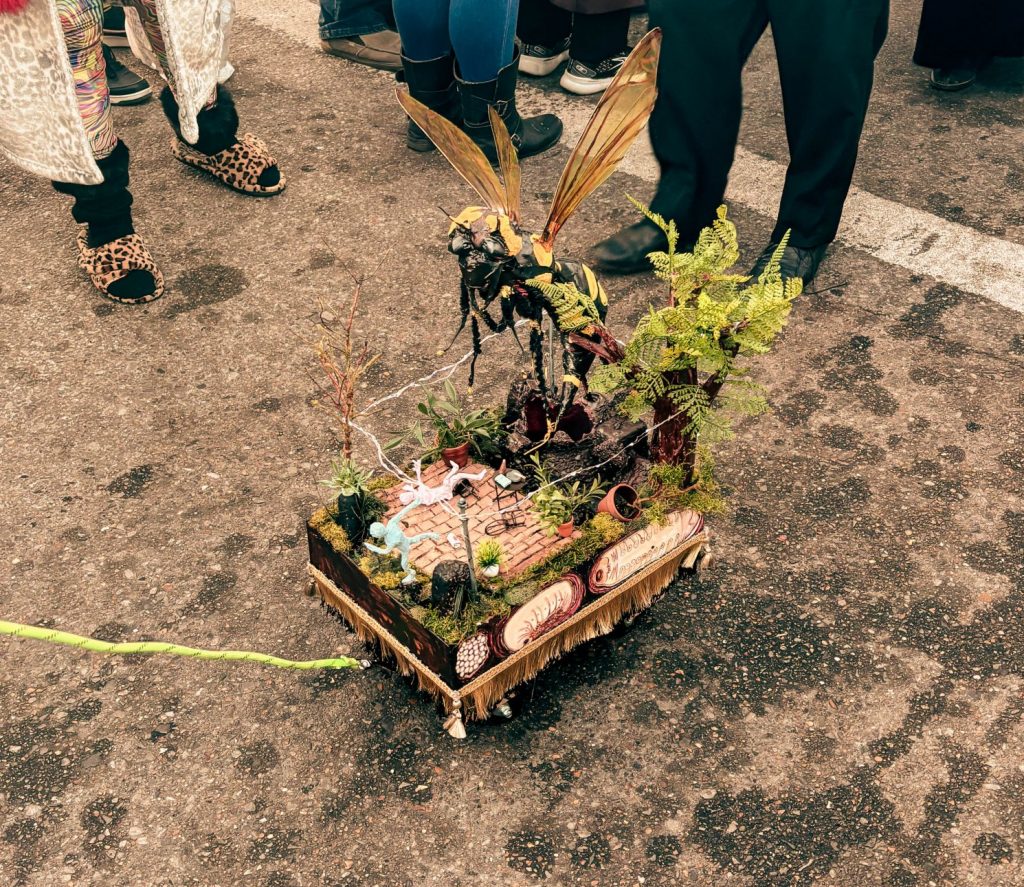
My first visit to New Orleans was in February 2024, incidentally during the start of Carnival season. That meant I was there to see the delightful ‘tit Rex microkrewe walking parade (pictured here). In fact, my brief stay was so wonderful that it inspired me to move to New Orleans in 2025 and stay through the entire Carnival season to experience it firsthand.
Carnival in New Orleans is legendary. Each year, tourists flock to the city for parades, parties, and festivities. In 2026, there were a record 2.2 million visitors during Carnival season, a 10% increase from the year before. It’s easy to see why: the season is a celebration of fun, community, and self-expression, with an energy that is downright contagious.
With Mardi Gras and Carnival in New Orleans only growing in popularity, I’ve created this guide to help you navigate the season, know what to expect, and make the most of your experience.
Carnival Season
What Is Carnival?
Carnival (or Carnaval) is the festive season that falls between Epiphany and Lent. Its history stretches back thousands of years to ancient European festivals and, during the Middle Ages, became part of Roman Catholic liturgy. Carnival begins on January 6th and concludes on Fat Tuesday—otherwise known as Mardi Gras. It is a tradition of celebration and feasting preceding the period of fasting for Lent.
Today, Carnival is celebrated in hundreds of cities around the world. In the United States, New Orleans is the most famous city for celebrating Carnival and Mardi Gras. In fact, Louisiana is the only U.S. state to recognize Mardi Gras as an official holiday.
Other major Mardi Gras celebrations take place in Port of Spain, Trinidad and Tobago; Rio de Janeiro, Brazil; and Venice, Italy. For more on international celebrations, Travel Squire offers a helpful overview. I was also fascinated by Trinidad and Tobago’s history of Canboulay, a precursor to the modern Carnival.
New Orleans began hosting Carnival and Mardi Gras festivities in 1837. Since then, the city has become almost synonymous with the celebrations, particularly in the U.S., drawing tourists from around the world each year.
When is Carnival?
Key Dates
- Twelfth Night (January 6): Official start of Carnival
- Lundi Gras: The day before Mardi Gras
- Mardi Gras (Fat Tuesday): Main celebration day
- Ash Wednesday: Marks the end of Carnival
Exact Carnival dates vary by region and shift slightly each year, but in New Orleans, the season begins on Epiphany (January 6) and continues through Fat Tuesday, the day before Ash Wednesday. Because Ash Wednesday is determined by Easter Sunday and the lunar calendar, the end of Carnival falls on a different date each year, generally between February and early March.
In New Orleans, many parades occur on fixed days leading up to Mardi Gras—for example, Muses rolls on the Thursday before Mardi Gras, and Orpheus rolls on Lundi Gras. Parade frequency and size ramp up during the final two weeks of the season, peaking in the five days immediately before Mardi Gras.
Carnival season concludes on Ash Wednesday. In New Orleans, this day is colloquially called “Trash Wednesday” due to the massive amount of waste left behind after the parades and parties of Mardi Gras.
The History of Carnival in New Orleans
Carnival and Mardi Gras in New Orleans traces its roots to Louisiana’s French and Spanish colonial history, which brought Catholic traditions to the region. The earliest Mardi Gras celebrations in Louisiana date back to the early 18th century. In New Orleans, the French governor popularized Mardi Gras masked balls, which eventually gave rise to masked street processions.
In 1837, the Mistick Krewe of Comus organized the city’s first structured parades and krewes (spelled with a “k” to add mystique and differentiate them from ordinary crews), transforming Mardi Gras from chaotic street revelry into organized parades and formal balls. Like many early krewes, Comus was composed exclusively of wealthy white men. The krewe stopped parading in 1991 rather than comply with city ordinances requiring desegregation, though private gatherings continued.
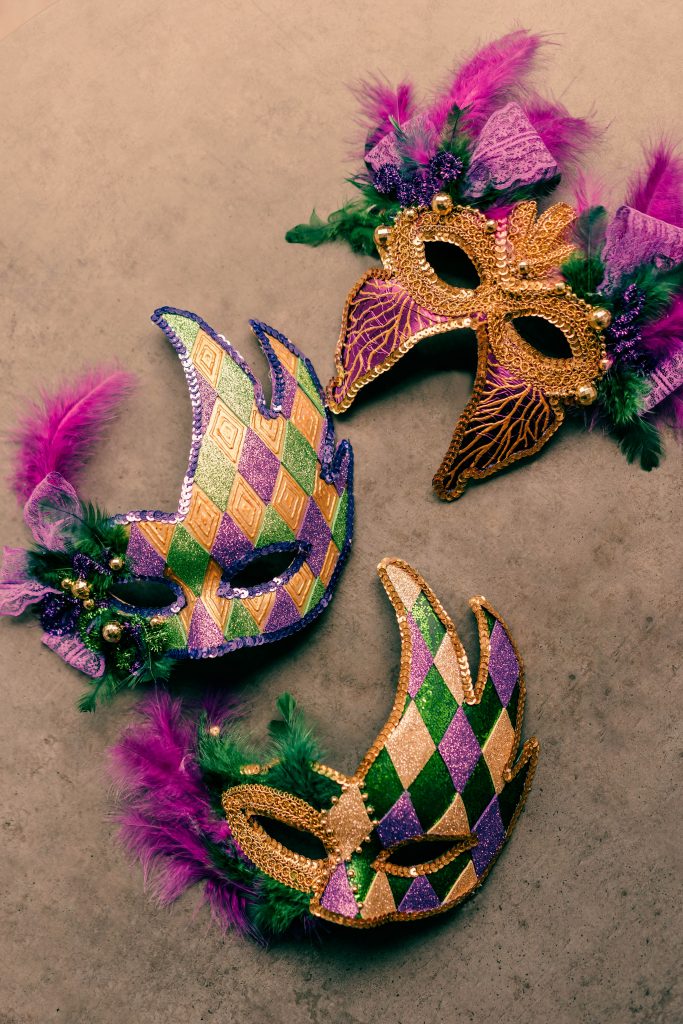
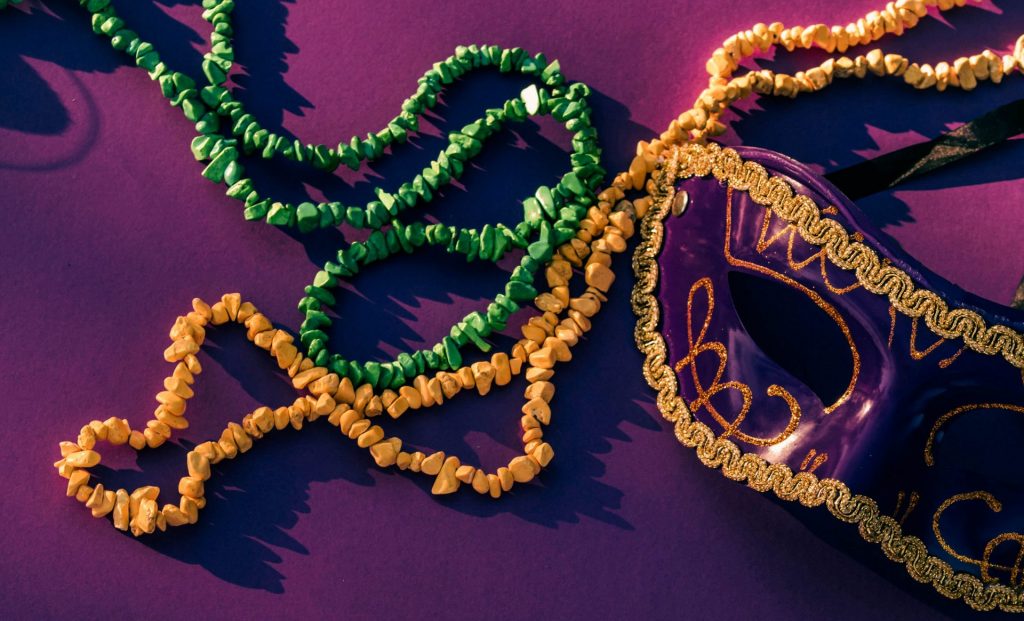
The Krewe of Rex, one of the oldest krewes and self-styled King of Carnival, established many Mardi Gras traditions in New Orleans, including the official colors—purple, green, and gold—and the iconic, highly coveted doubloons thrown from floats.
Several black krewes, such as the Zulu Social Aid & Pleasure Club, were founded in response to exclusionary practices in early parades. The Mardi Gras Indians, also largely excluded from mainstream celebrations, have a rich history that is as intricate and secretive as their processions.
While Mardi Gras in New Orleans has evolved significantly, it is important to acknowledge the celebration’s problematic history. The African American Intellectual History Society (AAIHS) has published an article on Mardi Gras’s complex past, and scholar Elizabeth Leavitt has written about how the festivities have historically reinforced societal and gender roles—both are worth reading for context.
Since its inception, Mardi Gras in New Orleans has changed greatly, with modern parades becoming more inclusive and representative of the city’s diverse population. Today, Louisiana is the only U.S. state to recognize Mardi Gras as an official holiday, and the celebration in New Orleans is an unforgettable spectacle with something for everyone, provided you know where to look.
New Orleans Carnival Traditions
Krewes
Krewes are social organizations responsible for planning, funding, and rolling parades during Carnival. Membership typically requires annual dues, which help cover the high costs of parades, post-parade balls, and other events hosted by the krewe.
All Mardi Gras krewes have their own traditions, rules, and themes. Some krewes also have subkrewes with their own themes and regulations. For example, the Intergalactic Krewe of Chewbacchus includes over 150 subkrewes in its sci-fi themed walking parade.
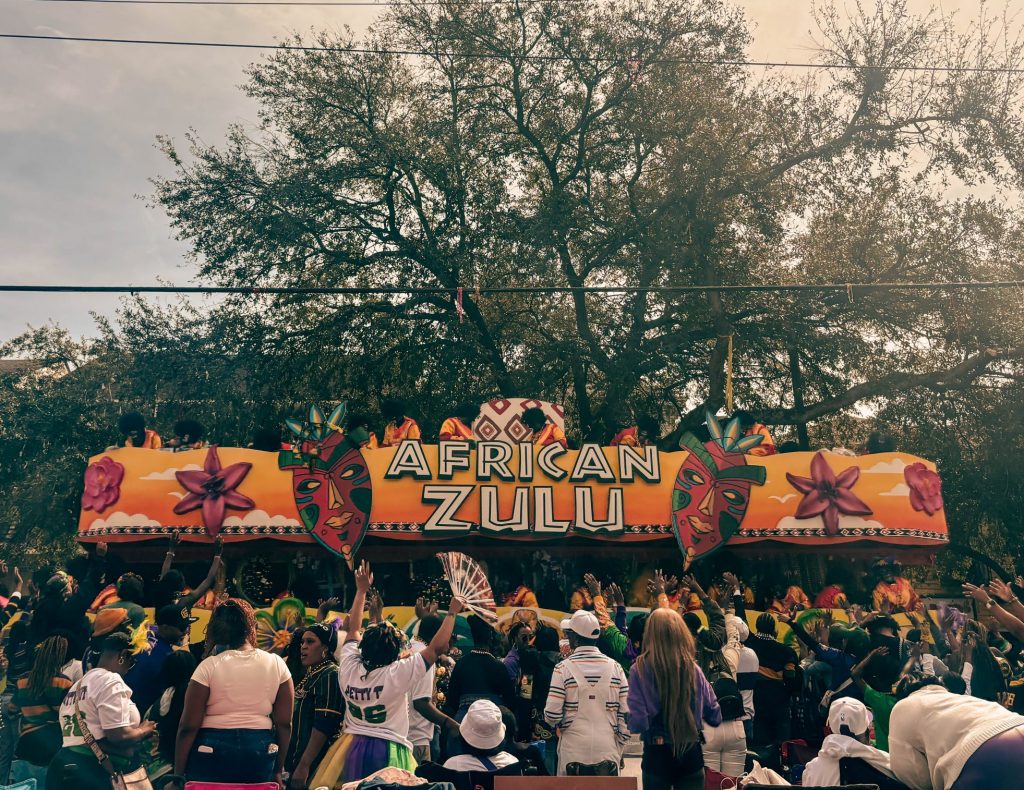
Major Historic Krewes
- Krewe of Rex: Known as the “King of Carnival,” Rex is one of the most iconic parading organizations in New Orleans. Rex traditionally sets the official Mardi Gras theme each year and helped establish many enduring customs, including the official Mardi Gras colors—purple (justice), green (faith), and gold (power). The parade rolls on Mardi Gras and is one of the most anticipated events of the season.
- Krewe of Zulu: Formally the Zulu Social Aid & Pleasure Club, Zulu is celebrated for its hand-decorated coconuts—some of the most coveted throws of Carnival. Zulu plays a central role in Black Carnival traditions. The parade rolls uptown on Mardi Gras morning, with riders wearing elaborate and stunning costumes, including headdresses and grass skirts.
- Krewe of Proteus: One of the oldest continuously parading krewes, Proteus is named after the shape-shifting Greek sea god. The krewe is known for its elegant nighttime parade on Lundi Gras (the Monday before Mardi Gras) and maintains classic Carnival traditions, featuring intricate floats and mythological themes.
Popular Modern & Super Krewes
- Krewe of Endymion: Famous for its massive Saturday night parade and high-profile celebrity grand marshals, Endymion draws enormous crowds along its Mid-City route. The krewe is also known for its elaborate floats and post-parade extravaganza.
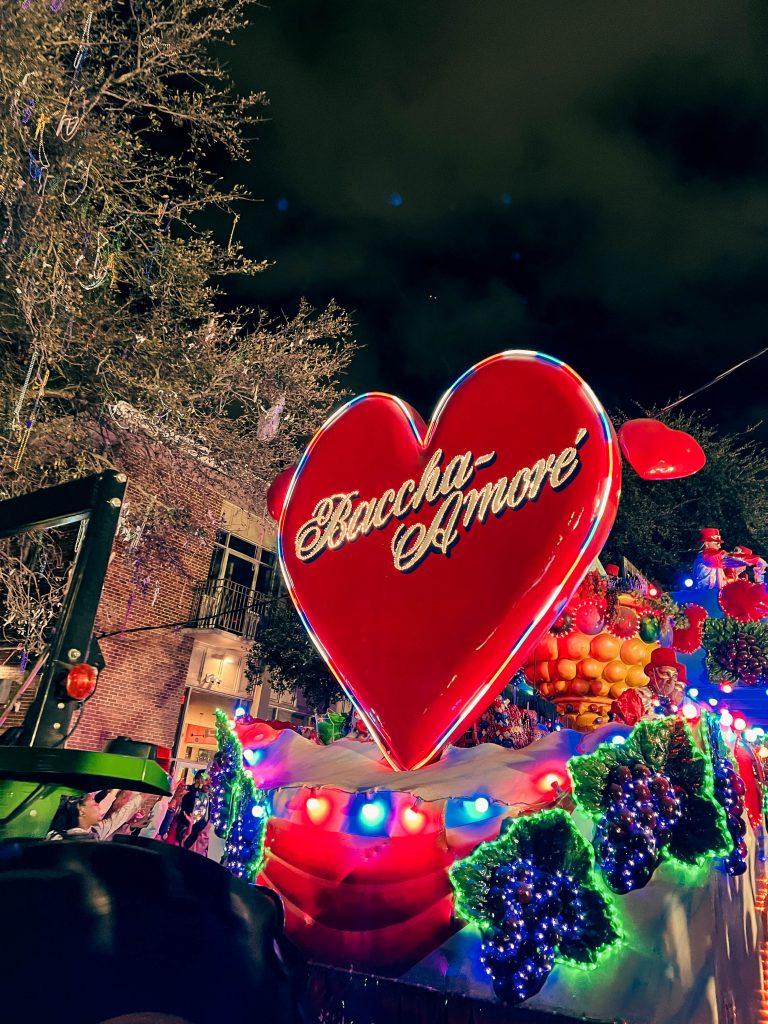
- Krewe of Bacchus: Named for the Roman god of wine, Bacchus is another major super krewe, celebrated for spectacle and celebrity involvement, including a celebrity “Bacchus” as its king each year. The parade rolls on the Sunday before Mardi Gras along the Uptown route.
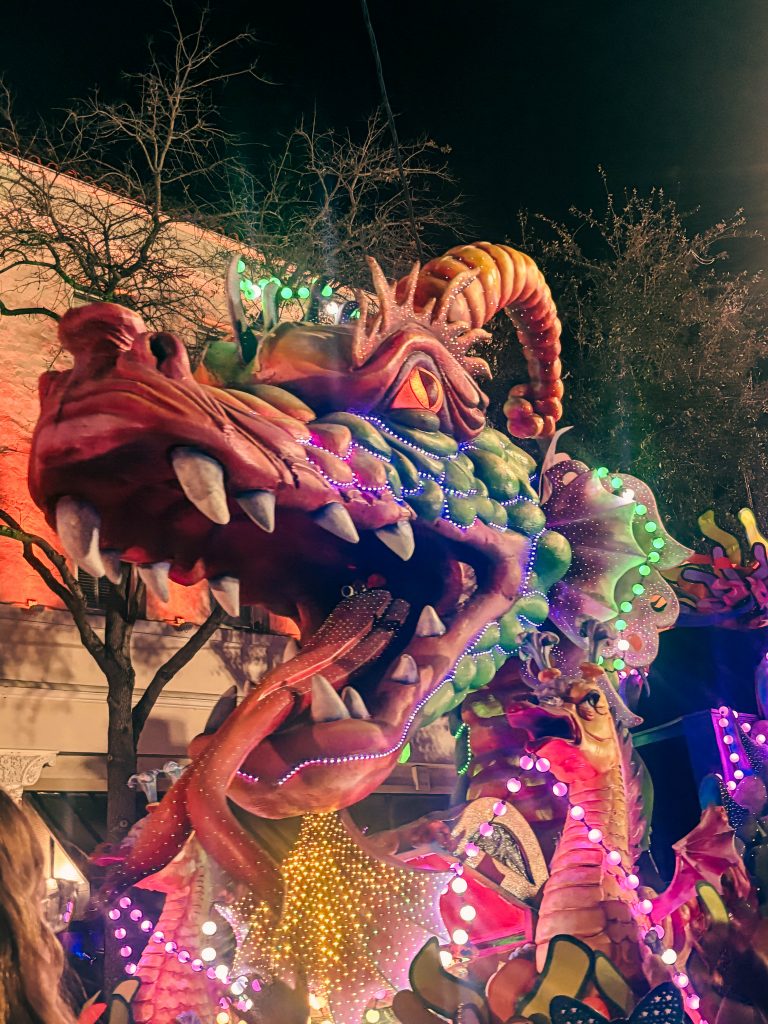
- Krewe of Orpheus: Parading on Lundi Gras, Orpheus (pictured here) is known for its music-driven atmosphere, signature light-up bead throws, and its multi-unit float, the Smoky Mary.
Walking & Neighborhood Krewes
- Krewe du Vieux: A highly satirical, adult-themed walking parade, Krewe du Vieux rolls through Marigny and the French Quarter early in Carnival season. Its floats are drawn by donkeys, and though the parade is relatively small, it’s well worth seeing. The 2026 parade critiqued ICE and the Trump administration, and it was incredible to see the community come together and support one another in difficult times.
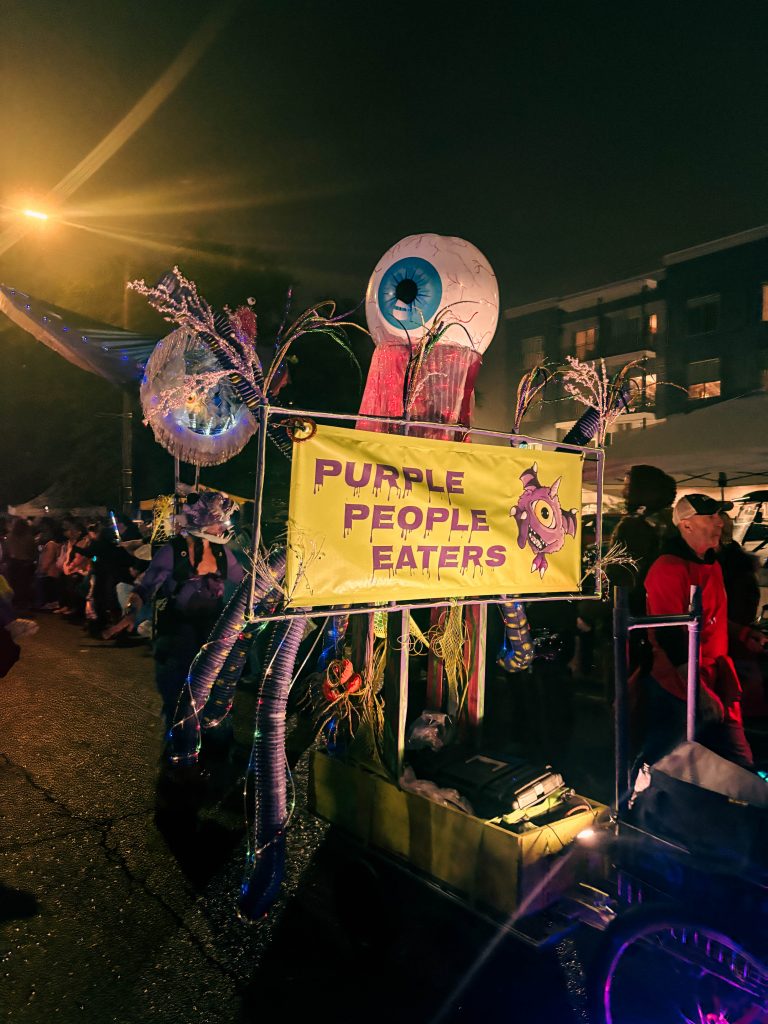
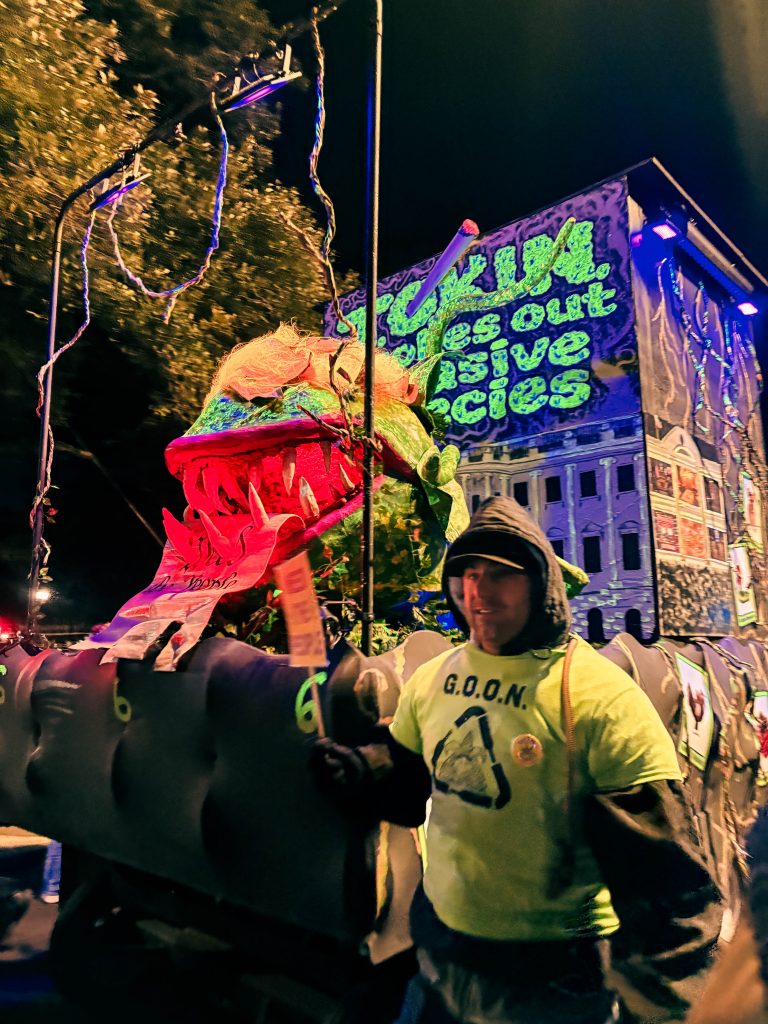
- Intergalactic Krewe of Chewbacchus: This large walking parade (pictured here) features 150+ subkrewes under an “intergalactic” theme. Chewbacchus is fun, family-friendly, and concludes with the Chewbacchanal, open to the public (tickets available online). Volunteers can also join for free through the “Red Shirt Rebellion” parade escort program. The parade is long, so I recommend watching near the beginning of the route if you aren’t a night owl. I enjoyed grabbing a drink at Brieux Carré (their sister kitchen Shift also has great food) while waiting—it was a delight.
- ‘tit Rex: My very first Carnival parade, ‘tit Rex holds a special place in my heart. Founded in 2009 in response to the rise of super krewes and their extravagance, it’s a walking parade with shoebox-sized floats. The floats are beautiful, and the crowd is friendly and mostly local. Though relatively short, it’s worth trekking to Marigny—St. Roch’s Market at the parade’s start offers good food, drinks, and excellent vibes.
Personal Favorite Krewes
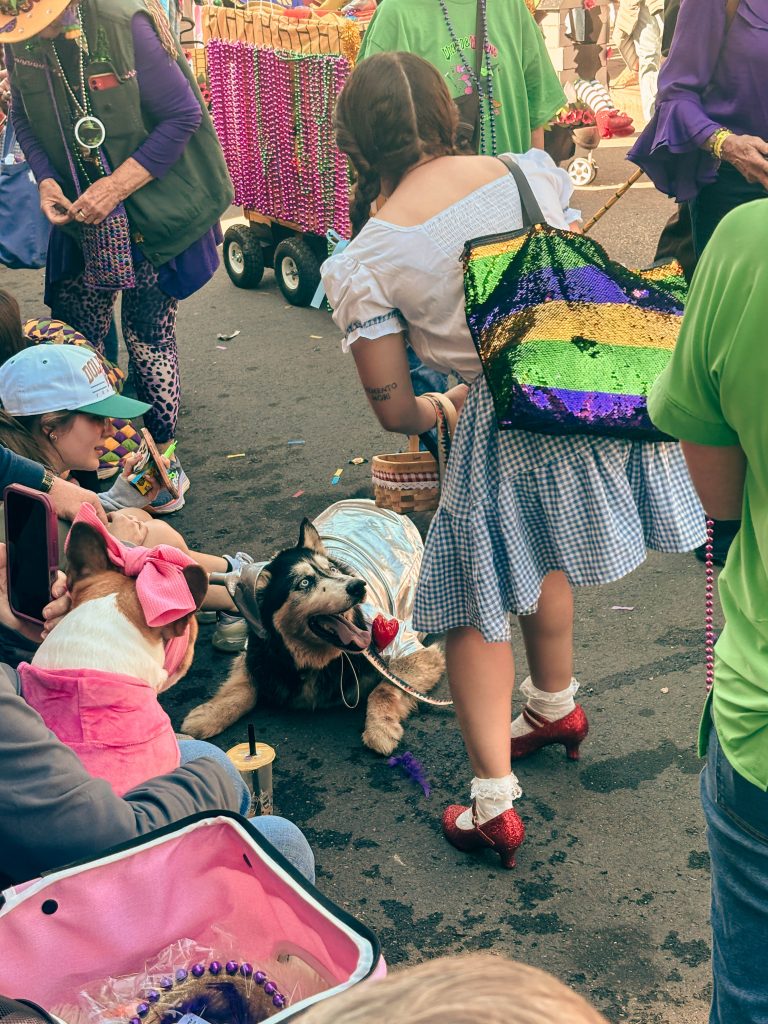
- Krewe of Barkus: A parade of dogs and their owners, Barkus is pure joy. In 2026, the theme was Wicked, and many dogs and floats were elaborately dressed. The parade moves slowly, stopping whenever dogs need a break, which adds to its chaotic charm. Throws often include dog treats and toys—bring your furry friend!
- Krewe of Muses: An all-women krewe founded in 2000, Muses (pictured here) is a favorite Uptown parade, known for fun annual themes. 2026’s theme was rubber ducks, which as a collector of rubber ducks made it my favorite for all the duck-themed throws.
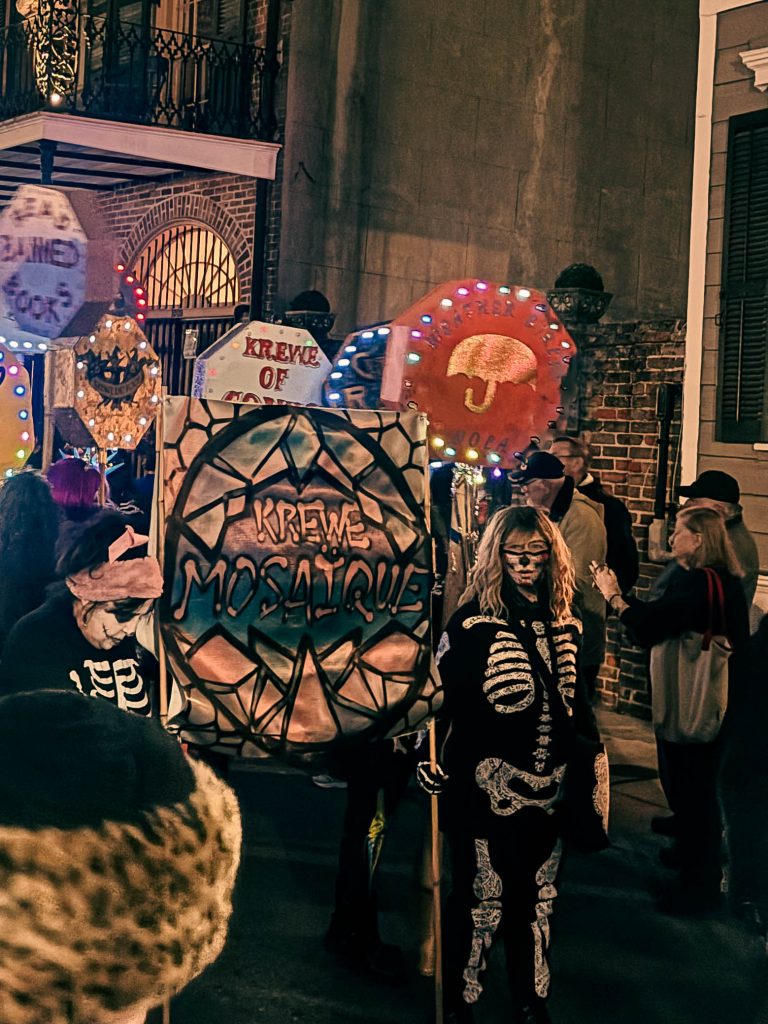
- Krewe Mosaique: My first parade of the 2026 season, Mosaique is a beautiful, long walking parade in the French Quarter. It happens early in the season and gives a preview of the Carnival festivities before the big parades ramp up.

Parades
The Uptown parade route hosts most of the large float parades during Carnival season It typically begins near Napoleon Avenue, winds down St. Charles Avenue, and continues toward Canal Street and the edge of the French Quarter. This is where many of the major krewes roll, and it’s one of the most popular spots for visitors—so expect large crowds, especially as Mardi Gras weekend approaches.
Groups like the Krewe of Barkus (a dog parade), the Krewe of Cork (wine-themed), and the Krewe of Chewbacchus (sci-fi and pop culture–inspired) primarily roll through the Marigny and French Quarter. These parades are smaller, quirkier, and much more interactive—you’re close enough to high-five marchers, admire handmade costumes, and actually chat with participants.
Some parades also take place outside the city center, including in Metairie, a suburb of New Orleans. These tend to be smaller, more local, and family-oriented celebrations. I personally found it difficult to reach Metairie via public transportation, so I didn’t attend—but if you’re staying nearby or have access to a car, these parades are just as festive and often a bit less crowded than those on the main Uptown route.
No matter where you choose to watch, plan ahead: check the parade schedule, arrive early for a good spot, and be prepared for delays. Mardi Gras runs on its own timeline—that’s part of the charm.
Throws
“Throws” are items thrown from krewe members to parade crowds. The most common throws are beads, doubloons, or plastic cups with krewe logos. Other common throws include plush toys, snacks, themed trinkets, and—more recently—functional or sustainable items like soaps, tote bags, and socks. Krewe of Muses and Freret are particularly known for their focus on sustainable or functional throws.
Some krewes also have specialty throws—signature items that are highly coveted by parade-goers. Zulu is most famous for its hand decorated coconuts, one of the most coveted throws at Mardi Gras, while Muses is famous for hand-decorated shoes—usually high heels, though sometimes boots.
To catch the most throws, position yourself near the front of the parade—but riders will also toss items to spectators further back if you can catch their attention. Most spectators wave, cheer, or clap as floats pass by. You can also call out to riders—the classic phrase is, “Throw me something, mister!”
That said, I’ve seen some creative ways of getting riders’ attention, from hand-made nets for glass beads to a girl holding up her own sneaker to trade with one of Muses’ riders.
Etiquette for catching throws is pretty simple: don’t be a jerk. Avoid catching throws meant for others, especially children. A rider will usually indicate if a throw is intended for you through eye contact or gestures. If you accidentally catch a throw meant for someone else, simply hand it to them.
For safety, never bend down to pick up throws until after floats have passed, and never run into the street for throws. Accidents are most likely if you aren’t paying attention or if a float can’t stop in time. Wait for a pause in the parade before reaching for any throws near your feet.
The floats also stop from time to time—delays are common in parades—and you’ll see spectators go up to the floats and ask riders for things directly. I’ve seen people barter with shooters in exchange for specific throws, and I was surprised to see that this actually worked.
It’s perfectly acceptable to gift throws to others. I often gave my throws to nearby kids, and I received rubber duck–themed throws from fellow spectators when they learned about my personal duck collection.
The most magical part of Mardi Gras is the community spirit, so I usually gave items away—if you attend enough parades, you’ll end up with more throws than you can use (see below for post-Mardi Gras recycling tips).
King Cake
One of my favorite parts of Carnival season is trying as much king cake as I can get my hands on. Traditionally, king cake is a ring-shaped cake somewhere between a cinnamon roll and a coffee cake, often filled with cinnamon cream cheese and topped with icing in the classic Mardi Gras colors: purple, green, and gold.
A small figurine—the “king cake baby”—is part of the tradition. Whoever finds it in their slice is considered royalty for the evening and hosts the next Mardi Gras gathering. Today, many bakeries place the figurine on the side for safety, but the ritual remains.
You can only get and eat king cake during Carnival (outside of the season, it’s cursed), and there is an endless array of bakeries and variations to try. Beyond the classic version, you’ll find bananas foster, snickerdoodle, and even savory options like boudin or crawfish king cake.
My personal favorite is Dong Phuong’s brioche-like cake (pictured here) with cream cheese, cinnamon, and raisins, while a friend loves the sweet potato king cake from Café Reconcile. Other popular spots include Brennan’s, Bywater Bakery, and Ayu Bakehouse. Most bakeries also ship outside New Orleans, and for full-sized cakes from popular spots, it’s best to order ahead.
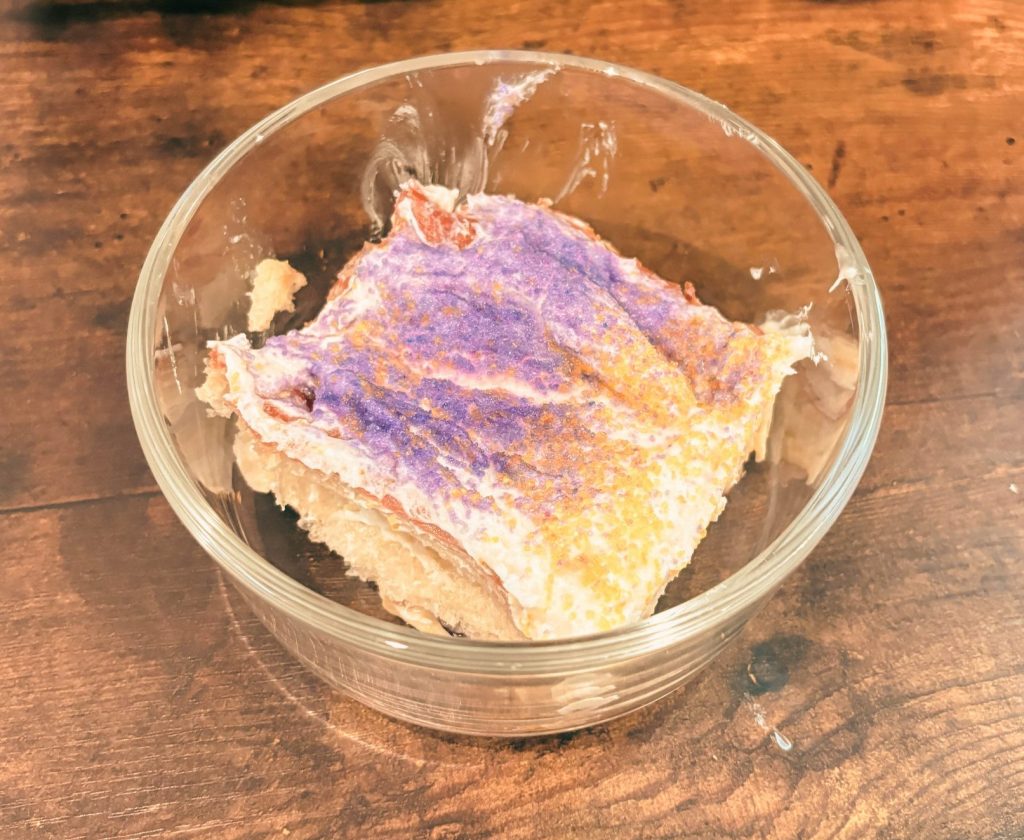
King Cake Hub is also a cool place to try out a bunch of different king cakes from one location. They’re open every day throughout Carnival from 8am to 6pm or sell-out (which can happen quite early in the day as the season ramps up), and bakeries throughout New Orleans sell their cakes there for its convenient centralized location.
Traveling solo, the one “downside” to king cakes is that they are gigantic (meant for parties/large groups), so many places only sell full cakes rather than by the slice. I was able to buy mini king cakes or slices from Ayu Bakehouse, Laurel Street Bakery, and Cafe Reconcile. A few places at King Cake Hub also sell small cakes.
Seasonal king cake flavors extend beyond the cake itself: lattes, beignets, and even daiquiris appear on menus. The king cake beignets at Ruby Slipper and PJ’s King Cake coffee are highlights, though I’d skip the frozen Bourbon Street ‘king cake’ daiquiris unless you like saccharine sweet drinks.
Planning Your Visit
Check Parade Info Early
Visit the Mardi Gras New Orleans website for parade schedules, routes, and local advice. It’s a great starting point to plan your Carnival experience and learn about the history and current parading krewes.
Book Accommodations and Dining Ahead
Hotels fill up quickly during Carnival, and restaurants and bars along parade routes may offer special seating or passes that sell out fast. If you have specific plans or preferences, book as early as possible.
Where to Watch Parades
I enjoyed staying in the Lower Garden District, which had a family-friendly vibe. Watching kids play with new throws or neighbors sharing drinks made the experience feel communal and joyful.
Go With the Flow
Reservations aren’t necessary if you just want to enjoy the parades. I often watched from the neutral ground along the route and wandered to local spots like Central City BBQ or Mais Arepas for a bite. Later, I’d stop by a neighborhood bar for evening festivities. Having a plan helps if you have specific goals, but otherwise, just following the energy of the season works beautifully.
Where to Stay
I lived in Central City near the Garden District, about a 10-minute walk from St. Charles Avenue, so I can’t speak much to hotels—but I can speak about location. For Uptown parades, Central City was ideal—I could walk to and from the parades and use my own bathroom. French Quarter parades were about a 40-minute walk, letting me avoid public transport entirely. This was ideal, especially since public transport is chaotic during Carnival. Aside from being farther from Metairie’s parades, I felt very central to Mardi Gras festivities.
When choosing where to stay, consider three things: proximity to parade routes, which parades matter most to you (Uptown vs. French Quarter), and your budget. Hotels along St. Charles Avenue are plentiful but extremely expensive during Carnival, especially on Mardi Gras weekend. The same goes for the French Quarter.
Ultimately, you’ll be balancing economy and convenience. Staying farther from parade routes may save money, but you’ll need to get up earlier and plan your commute. I liked my location in the CBD near the Garden District, but you could also stay further Uptown for early-day parades or near the French Quarter if you want to experience Bourbon Street’s festivities.
How to Parade
Your goals will shape your parade strategy. If partying is your main aim, you’ll want to stay near the French Quarter and Bourbon Street to easily bar hop during or after the parades.
Since 2014, the City Council has enforced rules to keep parades safe and fair:
- No ladders, grills, coolers, or other personal items within six feet of the curb.
- No parking on Napoleon or St. Charles on either side of the neutral ground two hours before the parade.
- No roping off public space with chairs, tarps, or other barriers.
- No private portable toilets on neutral ground or other public property.
Check the Mardi Gras New Orleans website for the most current rules.
Etiquette So Everyone Has Fun!
Do:
- Share generously: Throws, drinks, and food are fair game. (I once saw a woman hand out individual pieces of Popeye’s chicken—a hero among men.)
- Explore the route. Set up your chairs, ladders, or tables in advance and return later. Your items might shift, but people generally respect them, and you can make friends to watch your spot.
- Catch throws – respectfully! A little rowdiness is expected, but remember everyone is there to have fun—not just you.
Don’t:
- Walk between bands or walking krewes: It’s disruptive and disrespectful. Cross only before or after a group passes, or between floats.
- Move empty chairs: Seats may look abandoned, but locals often return to the same spot year after year. Someone is likely watching them.
- Set up your chairs more than 4 hours early: Officially, spots can be reserved up to four hours before a parade. On Mardi Gras, people often arrive at 4 a.m. (or earlier). I tried at 6 a.m. for three chairs and ended up at the very back. Stick to the four-hour guideline—don’t be part of the “Krewe of Chads.”
Carnival Season Tips
Be prepared for bag checks: On Mardi Gras weekend, security is heightened in the French Quarter. Expect National Guard members to search bags when entering the area—including suitcases if you’re heading to your lodging. The checkpoints are clearly marked, and outside of Mardi Gras day, the process is usually smooth and manageable.
Wear comfortable clothes and shoes: While you absolutely can and should be as elaborate as you’d like with your Mardi Gras costume(s), I recommend incorporating comfortable shoes and clothes as much as you can. Even if you’re planning only to watch the parades for the whole day, you’d be surprised how quickly an itchy wig or stilettos can get annoying.
Prepare for inclement weather: Parades roll rain or shine, so dress accordingly. Early in the season, nights can get unexpectedly cold—bring layers. For long evening parades like Chewbacchus or Mosaique, it can get chilly, so I recommend taking breaks inside nearby bars if you need to warm up.
Download the parade trackers. WDSU and WWL offer real-time parade tracking. WDSU also shows your location on the map, making it easy to see how close you are to the route. I used both apps, switching depending on which parade I was following—if one app doesn’t track a parade, the other usually does.
Mardi Gras Day Tips
Avoid cars and ride-shares if possible: Uber, Lyft, and other ride-sharing apps struggle to get near parade routes due to street closures. Parking is also limited and expensive. Whenever possible, plan to walk to parades—it’s usually the easiest option.
Arrive early to claim a spot: Official rules allow setup up to four hours before a parade. For example, Zulu rolls at 8 a.m., so expect people to be staking out spots by 4 a.m. If you want a good view along the route, plan to arrive as early as you can handle.
Scout the route in advance: Check out spots for food, drinks, and bathrooms. For example, Raising Cane’s on St. Charles Avenue hosts a sorority-run port-a-potty fundraiser, where you can buy an all-day pass for clean facilities—making it an ideal place to set up camp. For other Uptown parades, take time to wander the route early and note bars, restaurants, or other convenient stops you might return to later.
Skip fast food on Mardi Gras day: While other parade days are fine, on Mardi Gras the lines are insanely long, and the crowd pressure makes grabbing a quick meal stressful.
Bring plenty of supplies: This includes lawn chairs, water, drinks, and snacks. Buying reinforcements along the parade route will be expensive and time-consuming, so bring what you’ll need for the day.
Post-Parade Tips
Pack up quickly: After the final floats pass on St. Charles, people usually linger for about 30 minutes before cleanup crews with leafblowers arrive. Move out of the way to avoid getting hit with trash and debris.
Recycle unused throws: Some throws will stay in your collection, but others can be recycled instead of thrown away. Organizations like ArcGNO operate specialized recycling centers throughout New Orleans, accepting clean, dry throws year-round and redistributing them to krewes to reduce waste. Bead recycling bins are also often found along parade routes, and locations like Rouse’s Market and some hotels participate in collection programs. Community events or school drives may also collect throws—keep an eye on local announcements.
Practice Self-Care: Parading on Mardi Gras can be exhausting. After Carnival, make sure to set aside some time for some R&R. Where Y’At is a great local newspaper with a fun guide on how best to recover after Mardi Gras so that you’ll be ready to go at it again the next year.
FAQs for Mardi Gras and Carnival Season
When are the biggest parades?
Super krewes usually roll Thursday through Sunday before Mardi Gras, with major parades on Mardi Gras Day itself.
Do I need tickets to attend parades?
No. Parades are free. Only private balls and some grandstand seats require tickets.
Where should I watch a parade?
It depends on the vibe. Uptown (St. Charles Avenue) is festive and neighborhood-focused. Canal Street is busier and high-energy. The French Quarter is lively but hosts few large float parades.
How early should I arrive to get a good spot?
For major parades, 2–4 hours early is common; earlier for front-row spots. On Mardi Gras Day, people start setting up in the morning. I often got good spots even after parades had started.
Are parade routes walkable from the French Quarter?
Canal Street is walkable, but Uptown parades usually require a longer walk, streetcar, or rideshare.
Is it better to stay in the French Quarter, CBD, or Uptown?
The French Quarter and CBD are convenient and walkable. Uptown is great if you want to be close to parade routes. Book wherever fits your budget — just figure out transportation well in advance.
How far in advance should I book hotels?
As early as possible — ideally 4–6 months in advance for Mardi Gras weekend. Prices rise quickly and hotels often sell out.
Are restaurants and bars open during parades? Do I need reservations?
Yes, but they get packed. Make reservations for nicer restaurants well in advance, especially Thursday–Tuesday of Mardi Gras week. I do not recommend getting takeout or casual dining along the route, as the crowds are insane and the wait times can be hours-long.
Can you drink alcohol on the street?
Yes—plastic cups only (no glass). Open containers are legal in New Orleans.
Are parades family-friendly?
Most Uptown parades are very family-friendly. The closer you get to Bourbon Street at night, however, the more adult the vibe becomes.
What should I wear to Mardi Gras?
Comfortable shoes. Dress in layers (weather can swing wildly). Purple, green, and gold are traditional, but costumes and festive outfits are encouraged. Just make sure whatever you wear is something you’ll be happy and comfortable wearing the entire day.
What should I bring with me to a parade?
Portable snacks, water, sunscreen, hand sanitizer, a small bag, and something to carry your throws (like a tote). If you’re claiming a spot early, bring your lawn chairs— just be respectful of space and don’t be upset if they get moved or shifted while you’re away. I personally attached an Airtag to mine so I could easily find my place again after wandering along St. Charles.
What are “throws” and how do you catch them?
Throws are the beads, cups, doubloons, and trinkets riders toss from floats. Make eye contact, wave, and shout “Throw me something!” — enthusiasm helps.
Is it safe? What areas should visitors be mindful of?
Like any major event, stay aware of your surroundings. Stick with friends at night, don’t wander down empty streets alone, and use licensed transportation. Anywhere near Bourbon Street is going to be extremely chaotic and rowdy, so exercise extreme caution if you decide to go partying there.
How does transportation work during Carnival (Uber, streetcars, parking)?
Expect road closures and surge pricing. Streetcars stop running along parade routes, and buses take alternative routes. If you drive, parking is limited — read signs carefully to avoid towing. Avoid taking rideshares near the parade routes –they will be expensive, and street closures will make it hard for drivers to find you and vice-versa. If you need a ride, you’ll have to walk away from the parade route to ensure a smoother pick up.
Are parades ever canceled or delayed? How do I check updates?
Yes — while parades roll rain or shine, extreme weather (especially high winds) can delay or cancel parades. Follow local news outlets (WLL and WDSU) and official krewe social media accounts for updates.
Do I need cash?
Not necessarily, but it’s smart to carry some. Many places accept cards, but cash is helpful for small vendors or tips.
Are there public bathrooms along parade routes?
Yes, but it’s limited. Some portable toilets are set up (but they’re usually not cleaned), and bars/restaurants may allow access if you’re a customer or if you buy a bathroom pass. Plan ahead. I scoped out a port-a-potty by Raising Cane’s run as a sorority fundraiser, cleaned after every use –ideal situation if you don’t want to leave the route.
Is it worth visiting before Mardi Gras weekend?
Absolutely. The two weekends before Mardi Gras often have great parades with smaller crowds and slightly lower hotel prices. Chewbacchus is very early in the season, for example, and is one of my personal favorites.
Final Thoughts
Mardi Gras and Carnival season in New Orleans are incredible experiences. I felt incredibly lucky to be there for most of the season and to see so many parades and events that brought joy to the community. It’s a weeks-long celebration that culminates in a final day of fun and revelry that feels unmatched by anything else I’ve ever known. I loved the community spirit surrounding it all. I made friends during the parades, and some of my favorite moments were watching people share food, help strangers, and look out for one another.
While it’s possible to attend Mardi Gras in New Orleans and see it as an endless drunken party, I think that would be greatly missing out on what makes New Orleans’ Mardi Gras so much fun. It’s the joy, the kindness, and the sense of community among spectators cheering for the floats, riders, and performers.
I loved my time in New Orleans deeply, and Carnival season felt like the ultimate expression of the supportive, expressive culture of the city that makes it so special and captivating to locals and visitors alike. If you get the chance to visit for the season, I highly suggest you take it.