

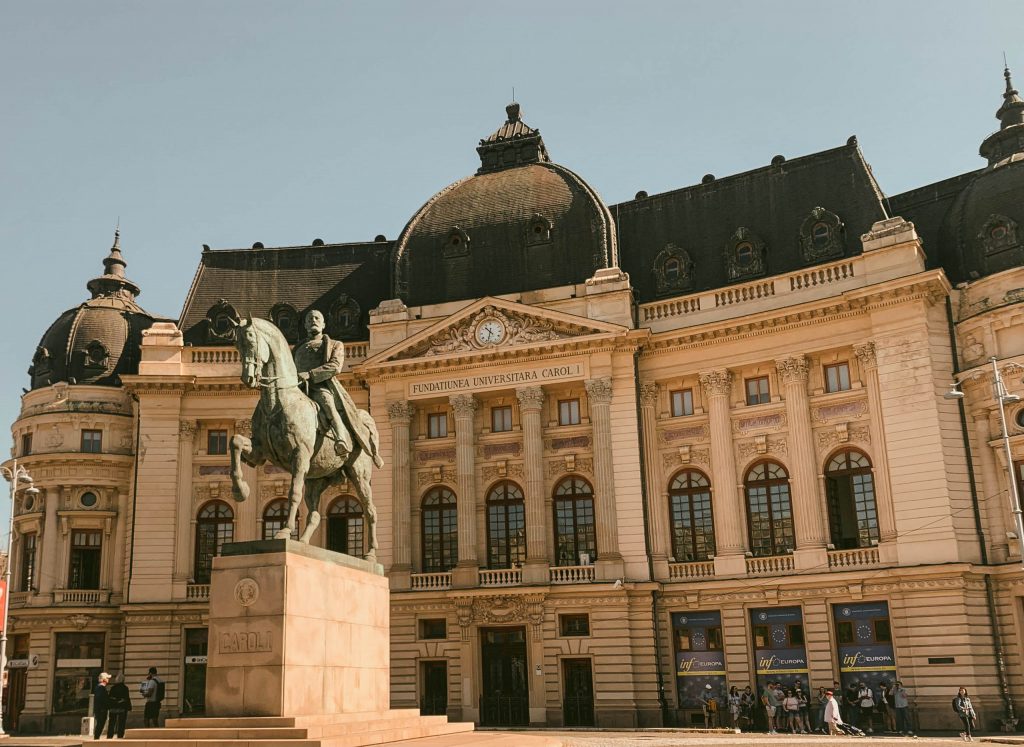
The Ultimate Bucharest Travel Guide
Overview
A practical, first-time-friendly travel guide to Bucharest, Romania, whether you’re visiting for a weekend or settling in longer. This guide covers everything from getting to and around the city, finding the best accommodations, exploring attractions and cultural highlights, discovering local restaurants and nightlife, useful Romanian phrases, and more to help you make the most of your time in Bucharest.
Romanian History
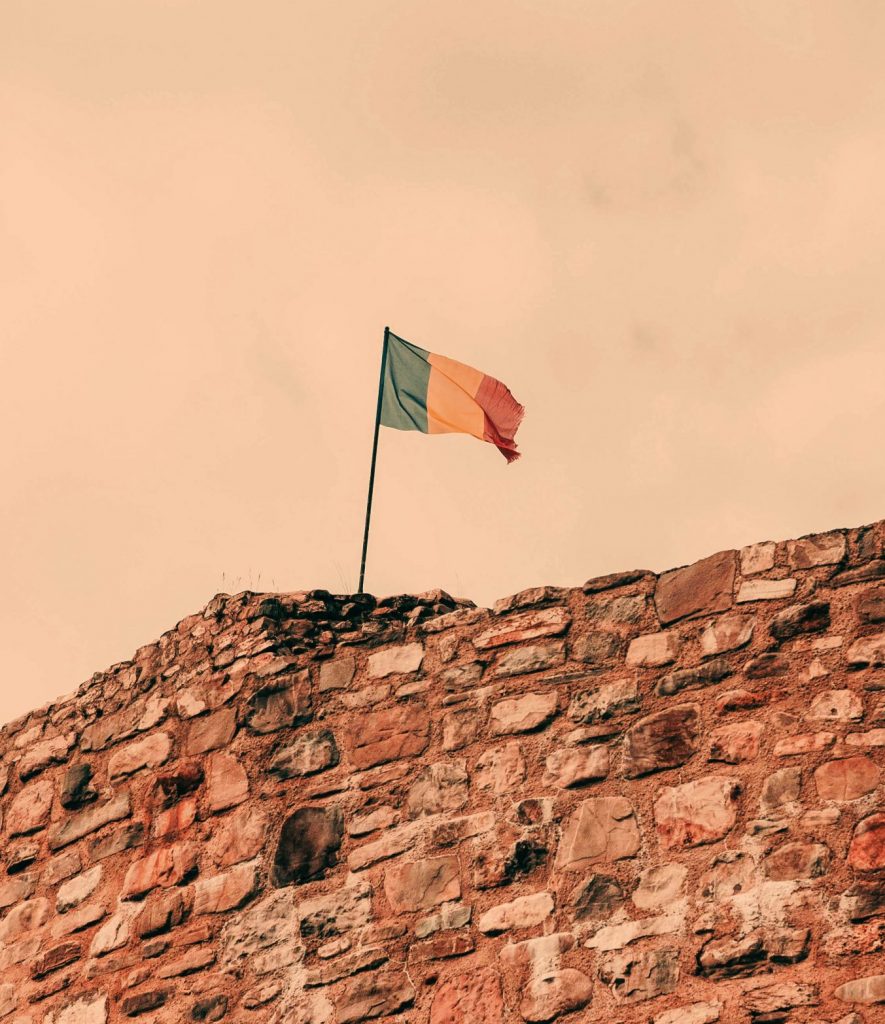
Romania’s history is vast, starting with the ancient Dacians, who were conquered by the Romans in the 2nd century, followed by regional invasions after the Romans withdrew, until the Middle Ages and the formation of three main regions: Wallachia, Moldavia, and Transylvania. Over the course of the 19th and 20th centuries, the regions united to form the territory of what are now the modern borders of Romania.
Following WWII, the country became a Soviet-influenced communist state under the authoritarian rule of Nicolae Ceaușescu until the revolution in 1989, at which point Romania transitioned to a democracy and eventually joined the EU in 2007. Romania is now part of the Schengen Zone, which simplifies border travel for visitors coming from within the EU.
Culture
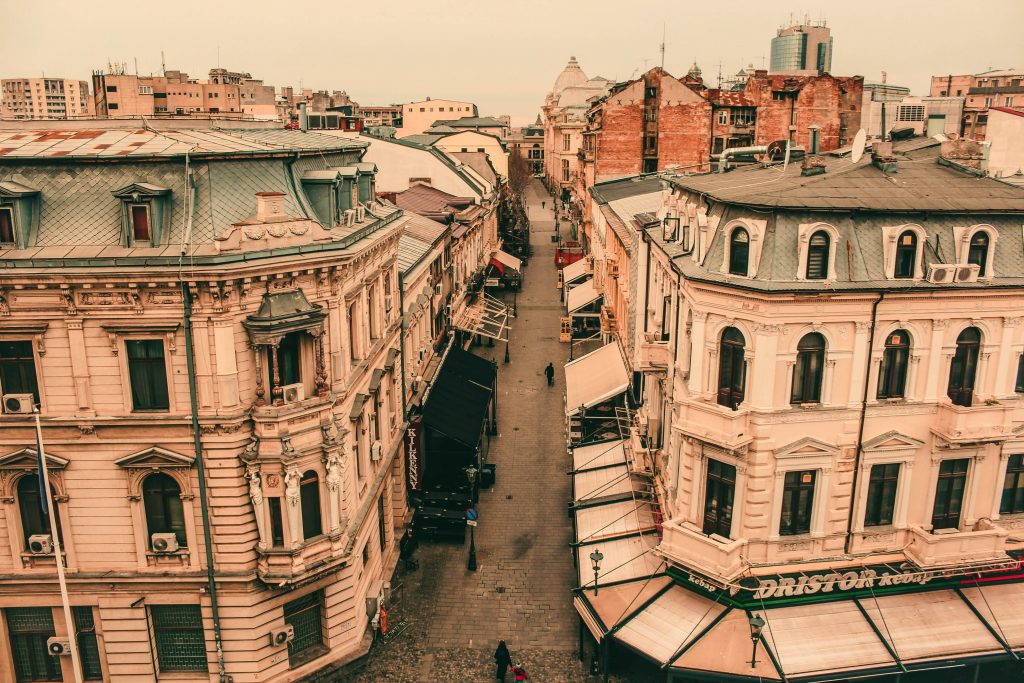
Today, Romania blends deep-rooted traditions with a growing modern scene. In Bucharest especially, you’ll see this in the mix of Belle Époque buildings and communist-era blocks, as well as its rapidly expanding café and arts scene.
There’s also a generational divide: older Romanians are typically more traditional and conservative, and younger generations —particularly in Bucharest and other major cities— are generally more open and globally minded.
What To Expect
Romanians tend not to practice small talk or excessive politeness, which can come across as blunt or reserved in day-to-day interactions—especially in restaurants or shops. You might find a more hands-off and unhurried approach with services or bureaucracy, and you should be prepared for things to move at a slower pace than may be familiar to you.
Language
Romanian is the official language of Romania, spoken by about 90 percent of the population. A minority (about 7%), mostly in Transylvania, speak Hungarian. In larger cities and tourist-heavy areas, many people also speak English, which is widely taught in schools.
Food + Drink
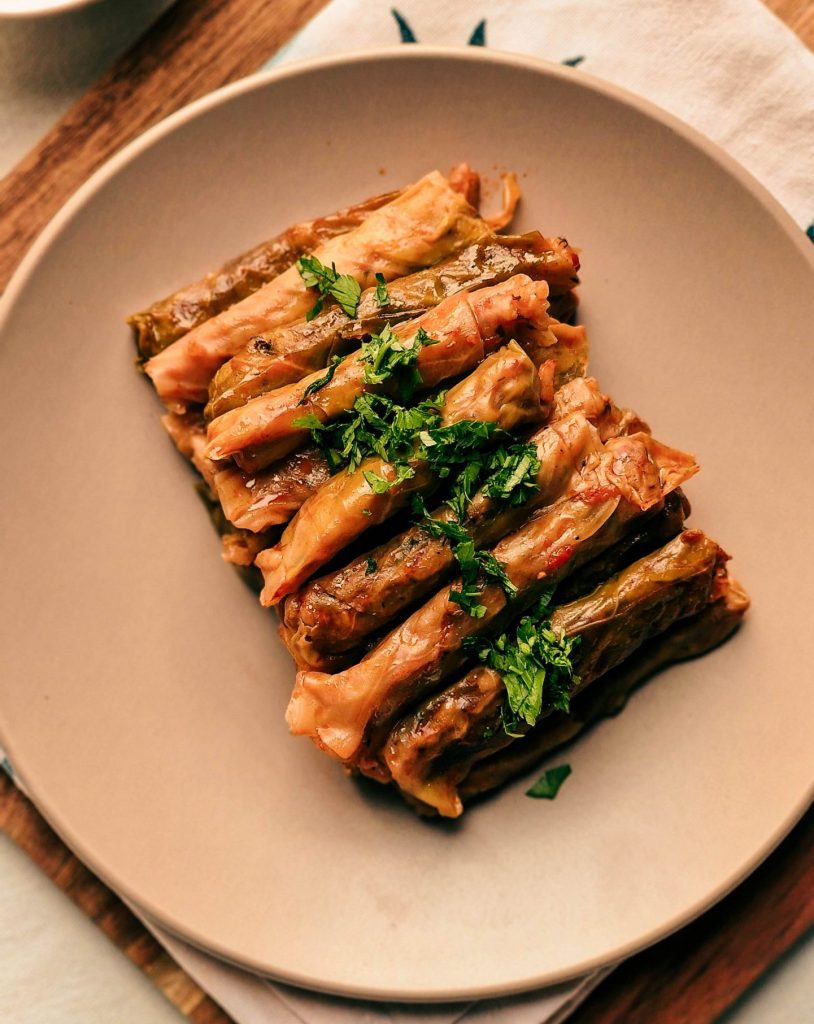
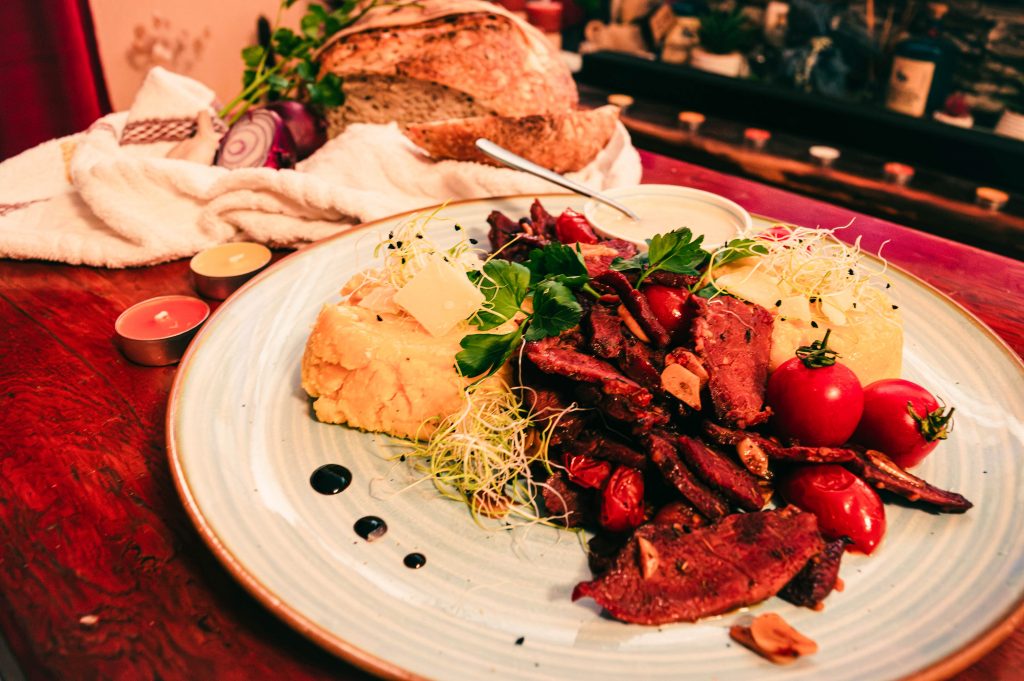
Romania offers an array of wonderful dishes and is known for its hearty soups and its meat (especially pork). Staple dishes like mămăligă (polenta) and sarmale (stuffed cabbage rolls) also share influences with other national culinary traditions, appearing in various forms across the Balkans and former Austro-Hungarian territories.
Generally, try any soups/stews, pork dishes, or offerings of local cheeses and meats, and you really can’t go wrong.
Must-Try Dishes
- Mici: grilled skinless sausages
- Ciorbă de burtă: tripe soup —it’s delicious, trust me
- Bulz: cheese-stuffed polenta, with fried bacon, eggs, and sour cream
- Mămăligă cu brânza si smântână: polenta with cheese & sour cream
- Papanași: fried donuts with fruit sauce and sour cream —my personal favorite
Drinks
Romania is also known for its extremely strong liquors: țuică (traditional ‘plum brandy’) and palinca (double-distilled and can be made from other fruits —pears, quince, etc.). There’s also Vișinată, a lesser-known Romanian offering, which is sweet cherry liquor.
Also, Romania has a great selection of local wine producers and breweries. Zăganu Craft Beer is a great example (you can find a few of their bar locations across Bucharest, and I highly recommend sampling their flights). For local wines, Grey Line Romania runs a winery tour from Bucharest that includes samples at 3 different wineries in the region.
Safety Info
What to Expect
Bucharest is generally a very safe city for travelers. Petty crime is your biggest concern —pickpocketing on crowded buses or in Old Town. Violent crime against tourists is pretty rare.
Personally, the only issues I’ve had during my time in Romania were people asking for money and not leaving after being told ‘no,’ and that only happened a handful of times in my three months there.
Common Scams to Avoid
Taxi scams: Overpriced fares or drivers “forgetting” to turn on the meter.
Fake petitions / donation scams: People (sometimes children) shoving clipboards at you in touristy areas. I’ve had this while I was traveling in other parts of Europe, but be aware since it could also happen here.
Bar scams: I haven’t seen this personally, but I’ve heard tales from some Eastern European cities —just avoid sketchy bars where someone ushers you in off the street.
Nighttime
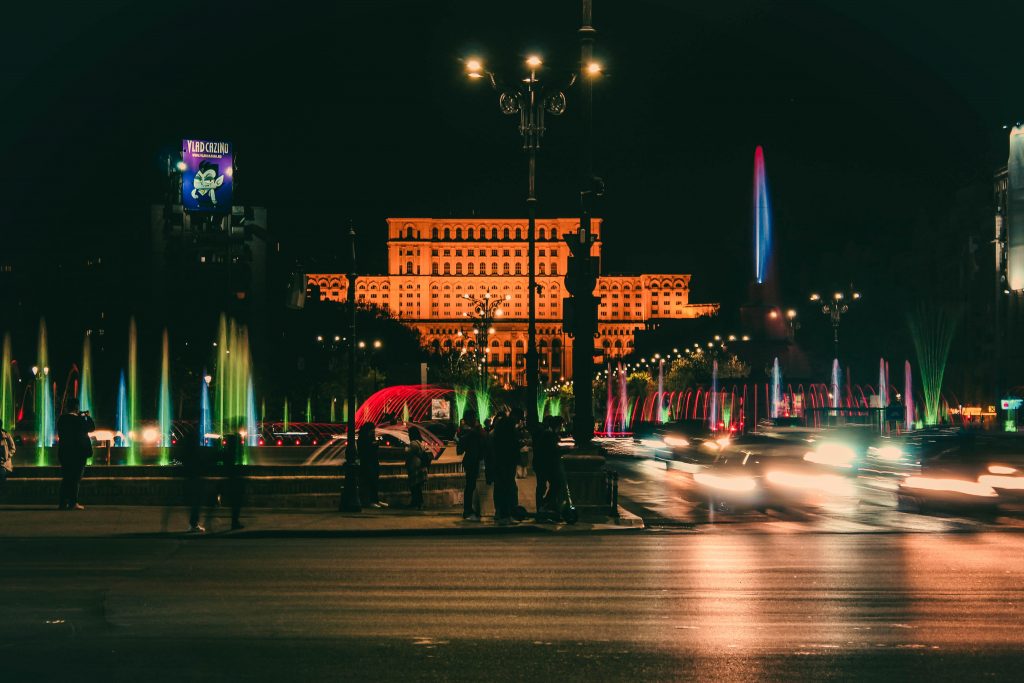
The central areas (Calea Victoriei, Old Town, University Square) are lively and well-lit well into the night. I was very wary about being a woman walking alone at night, but in Bucharest I found I felt completely safe and comfortable as long as I was in the city center. (Even the outskirts were generally fine, just less populated.)
LGBTQIA+
Bucharest has a growing queer scene, with several bars and events (Q Club, Thor Men’s Club, Queer Night at Control Club). While public attitudes are still more conservative than in Western Europe, younger generations are much more open, and LGBTQIA+ travelers generally should not anticipate major issues.
That said, I can count on my hands the number of openly queer couples I saw walking the streets in my time here. While I did not witness any open harassment or tension, I still recommend being more cautious/discrete than in other parts of Europe.
Things to Do
Must-See Attractions
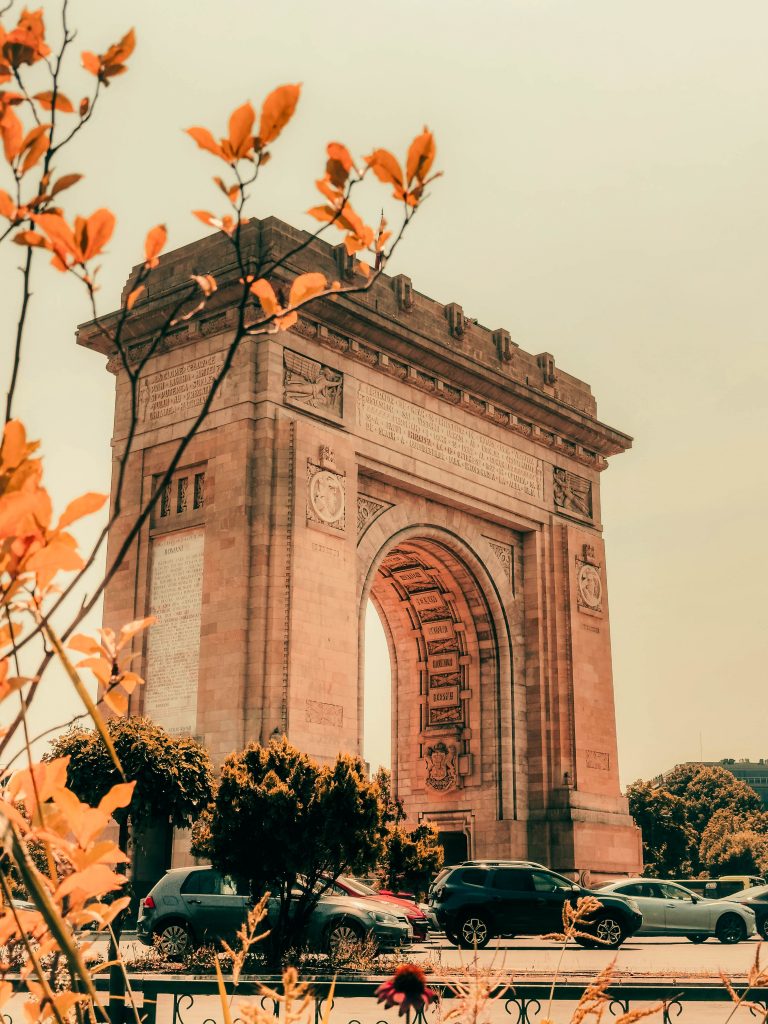
Arcul de Triumf and Herăstrău Park
Bucharest’s current “Triumph Arch” was erected in 1921, rebuilt in 1936, and modeled after Paris’s original Arc de Triomphe. It commemorates the Great Union of 1918 following Romania’s victory in WWI.
After visiting the arch (and optionally the small museum inside), you can go across the street and stroll through Herăstrău Park and along Lake Herăstrău. This is by far my favorite park in Bucharest—I recommend finding a place to read along the water for a relaxing afternoon. It’s enormous and offers plenty of benches, lakeside restaurants, seasonal boat rentals, street food vendors (try the gogoși), and scattered attractions throughout.
Old Town
The beating heart of Bucharest, Old Town is a cobblestoned hub of entertainment, with bars, restaurants, and shops lining the streets, people milling about, and many a restaurant staff trying to entice passers by to sit at their tables.
It gets uncomfortably packed during peak times, but the energy of Old Town is not to be missed (or if you don’t like crowds, go during the day on weekdays for a slower-paced vibe).
Museums
Bucharest’s museums are affordable and often overlooked, which means you can usually wander without crowds. Most charge between 15–30 RON (3–6 €), with steep discounts if you have a valid student ID.
I recommend the National Museum of Art, the Romanian Peasant Museum —visit the weekend flea market in its courtyard!— and, my personal favorite, the Grigore Antipa National Museum of Natural History for some delightfully bizarre taxidermy exhibits.
Palace of the Parliament
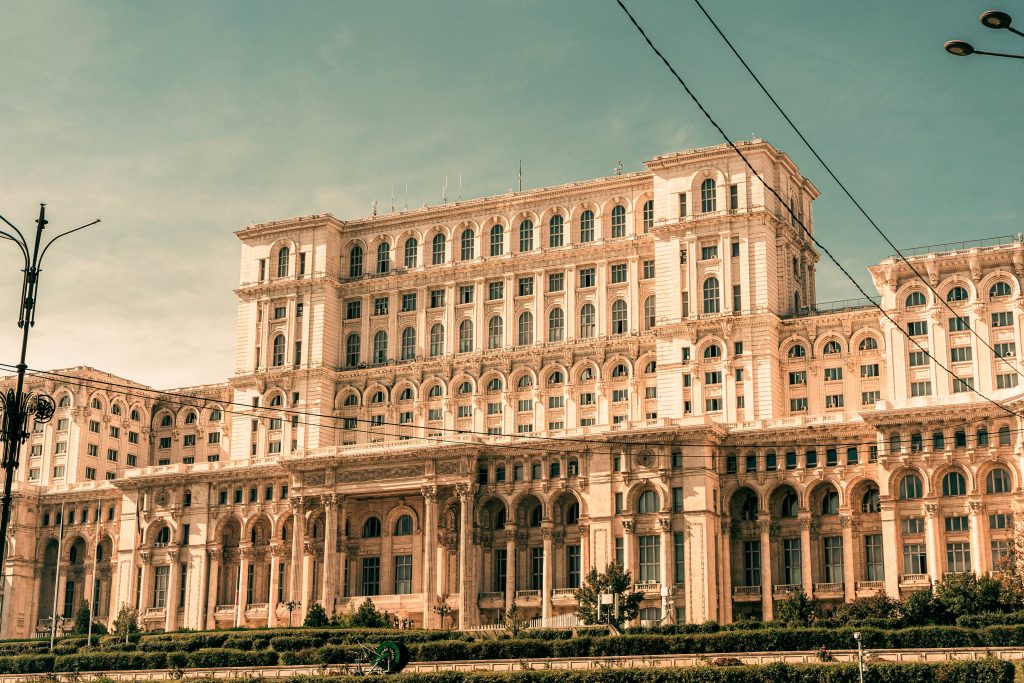
A monument to opulence and luxury, Bucharest’s Palace of the Parliament is 12 stories and over 1000 rooms. It was constructed in the 1980s during Romania’s communist era and is often cited as one of the largest administrative buildings in the world (second only to the United States Pentagon).
The interior can only be viewed through guided tours, which will take you through its grand halls, massive chambers, and meeting rooms while also providing historical and cultural context.
Visiting Info
Tickets are 60 Lei (12 €) for adults, 30 for students, and 20 for children. You can book over the phone M-F between 9:00 and 16:00 through Palace of the Parliament Bucharest’s official website. For individuals/groups up to 9 people, you can book 1 day in advance. There are also tours available through numerous 3rd party companies.
Popular Activities
Free Walking Tours
Whether you’re on a short visit or staying long-term, a walking tour is a great way to get the rundown on a new city. Just remember that while they are “free walking tours,” you are expected to tip —typically 5-10 euros minimum.
The most popular walking tours for Bucharest cover Old Town and/or Romania’s communist-era history. Bucharest by Foot, for example, offers free tours every day in English, Spanish, and Italian. There are also a ton of other tour companies, most of which offer free and paid tour options in multiple languages.
If you’re looking for a free tour more off the beaten path, Walkabout offers a Bellu Cemetery Tour on Sundays at 11am. It’s a bit far from the city center, but it covers an intriguing (and spooky) side of the city and country than most standard tours.
Therme Bucharest
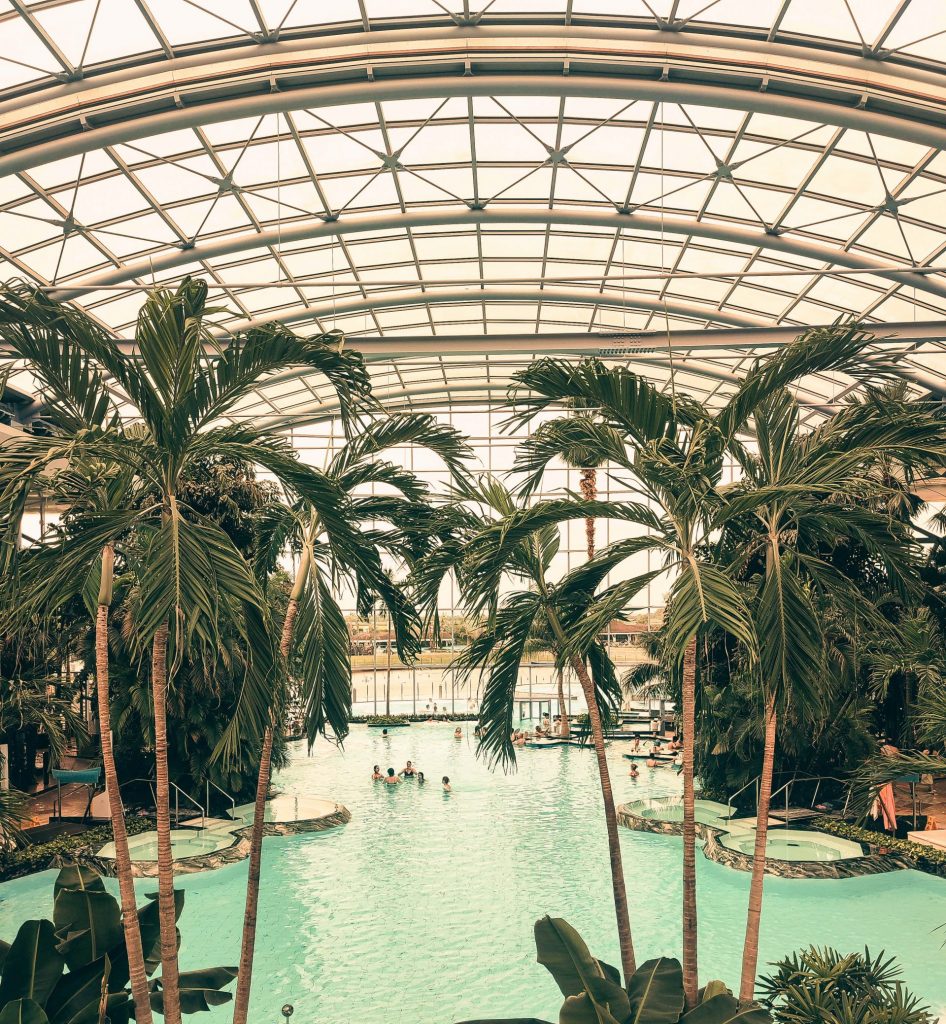
Famous for its affordable price tag for a luxury spa resort, I personally found Therme to be overrated for what was essentially a heated pool.
However, people love it. Plus, I admit I did enjoy the in-pool bar and drinking fruity cocktails without having to leave the water, so it’s certainly not all bad.
Transylvanian Castle Tour
Of course, you can hardly talk about Romania without mentioning the history of Transylvania, especially Bran Castle and its connection to Bram Stoker’s Dracula. As such, there are many, many Transylvania castle tours from Bucharest. Nearly all will stop at Bran Castle, which is roughly 3 hours from Bucharest. Other common stops on the trip are Peles Castle in Sinaia; Cantacuzino Castle, where parts of Wednesday were filmed; and Brasov, the medieval town nearest to Bran Castle.
I’ve been on multiple Transylvania tours, and while I recommend the bus tours for the low transportation cost, I do not recommend buying your museum/castle admission tickets from the tour companies. You will be obscenely overcharged —up to 3x the real ticket price— so buy your tickets directly through the museums/castles, either in-person or online.
Restaurants
Bucharest has many great restaurants, and it has no shortage of places advertising traditional Romanian food. That said, some of the most famous spots—Caru’ cu Bere and Hanu’ lui Manuc for example—fall short of expectations, especially for the higher price points.
As for the places I would genuinely recommend for trying Romanian food, my tastes veer toward less formal options:
- The food stall in the outdoor flea market near the National Museum of the Romanian Peasant: only open on weekends, the stall serves a rotating menu of hearty Romanian dishes.
- Autentic Food (actual spelling, by the way): a no-frills eatery with meals served cafeteria-style and with discounts for takeout orders.
- Old Kitchen: fantastic Transylvanian cuisine in a cozy family-run restaurant
- Noua Bar: for something a bit fancier, Noua has an intimate space and menu serving elevated Romanian cuisine that’s creative and mouth-wateringly good (get their sourdough starter, trust me)
- Papila: Famous for its Ramen Sunday (a must-try: reservations open on Wednesdays at 11am), Papila also offers elevated takes on Romanian cuisine during their normal operations.
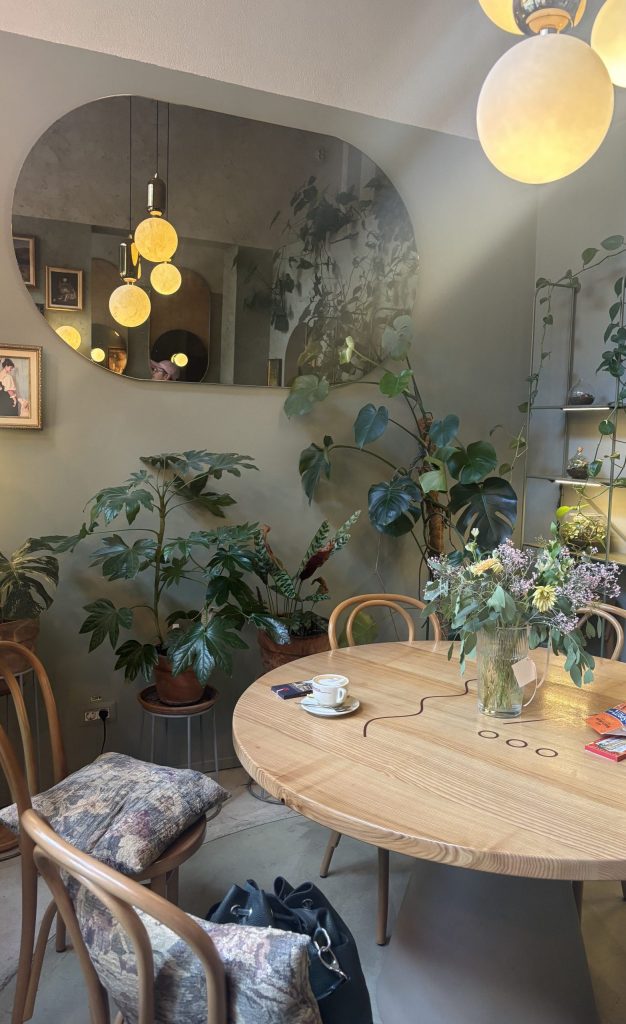
Weekday Lunch Meal Deals
Many local restaurants offer meniul zilei (menu of the day) between 12:00–15:00: usually a soup + main for around 25–35 lei (€5–7). It’s one of the best ways to eat well on a budget. You’ll find these especially in less touristy areas or near office buildings. Try Bistro High Life, La Mama, or Autentic Food for good affordable Romanian lunch.
Caru’ Cu Bere also has a weekday lunch menu, if you ask for it, which can be a decent way to experience the space without paying full tourist prices.
Fast-Food/Takeout
Local fast food options include Shaormeria Băneasa (known for their massive shawarmas), Springtime (old-school Romanian fast food), and Gregory’s for quick pastries and coffee.
Food delivery apps like Bolt Food are great and delivery fees are usually low. I’d personally skip Glovo—I’ve had frequent order issues and poor customer service.
Nightlife
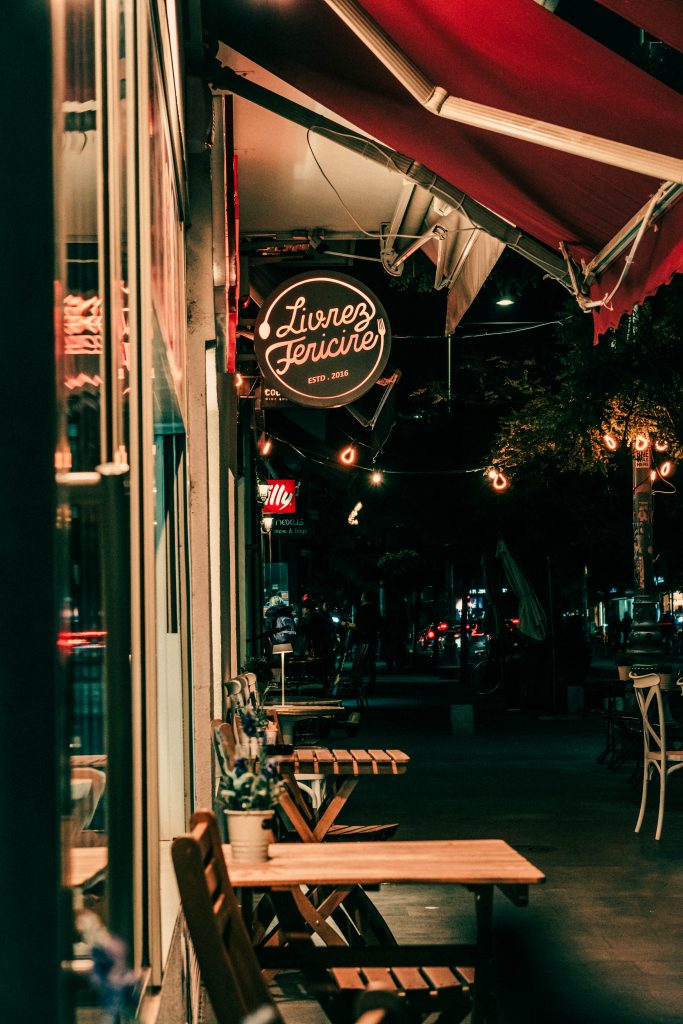
For live music in chill venues, places like Green Hours Jazz Club and Control Club are local staples.
As for bars, there are a few I personally recommend:
- Teo’s Tonics – A laid-back outdoor seating setup in the heart of Old Town, you buy your drinks from their large self-serve store selection and enjoy the people-watching on one of the city’s busiest streets.
- Robescu 14 – Tucked away on a nondescript street, R14 is an intimate bar experience, with custom cocktails and a magical atmosphere.
- Terasa Baraka – A quirky bar in Herăstrău Park across from a skate park. It has great vibes, a mixed local crowd, and carries my favorite local cider (Miedăria, if you were wondering).
Day Trips from Bucharest
There are a few cities within a day’s travel from Bucharest. It depends on your time constraints, but if you can, I’d recommend visiting all of them. Brasov is my personal favorite for its historic town square and relaxed, friendly atmosphere.
Brasov
Best for: history lovers, scenic walks, and travelers who want to enjoy a classic Transylvanian atmosphere at their leisure.
A beautiful medieval town surrounded by the Carpathian Mountains, Brasov is about 2.5 hours by train or by car from Bucharest. I recommend using the train to avoid any traffic slowdowns.
It’s good for a day trip, a weekend getaway, or as part of one of the many guided Transylvanian castle tours that usually include it as a stop. Highlights include:
- Piața Sfatului (Council Square) – the heart of the old town, lined with cafés and historic buildings.
- Black Church – a 14th-century Gothic church and the largest of its kind between Vienna and Istanbul.
- Mount Tâmpa – a steep hike gets you panoramic views over the city near the iconic “BRASOV” sign.
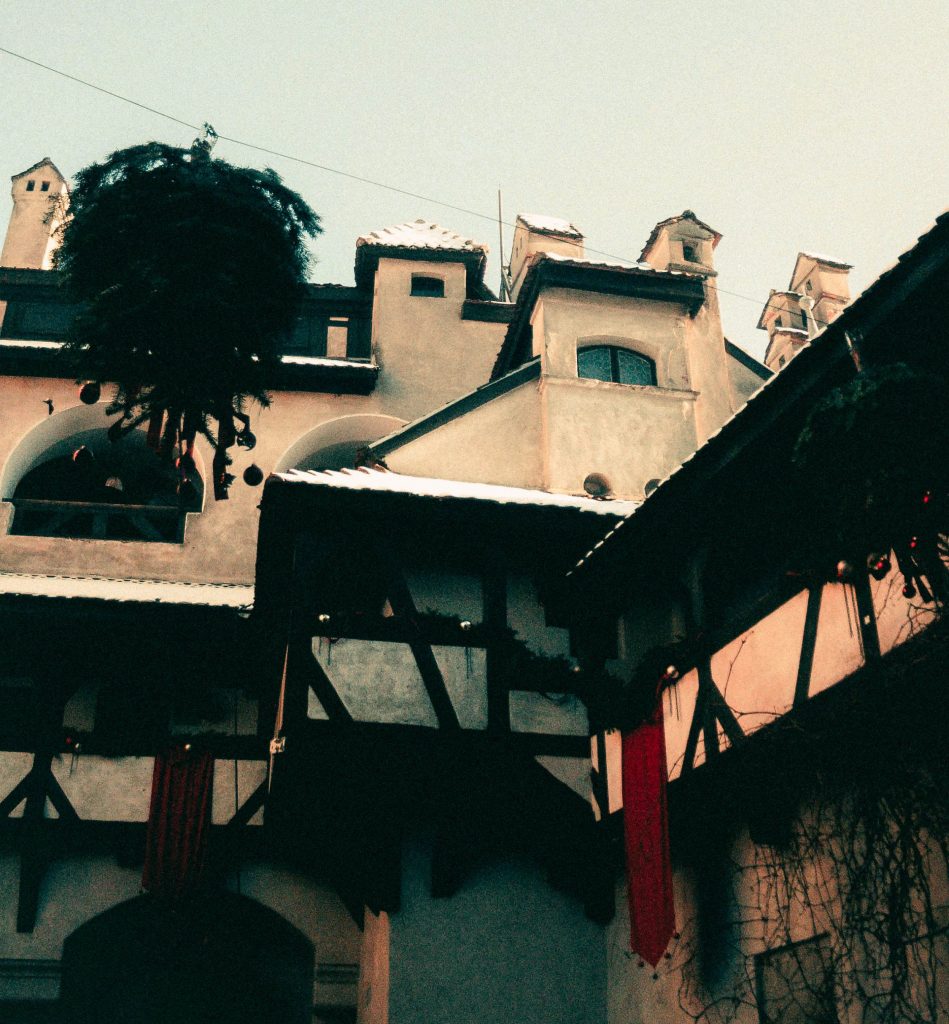
- Bran Castle – the so-called “Dracula’s Castle” is about 30 minutes away, and many castle tours stop here along the way.
Constanta
Best for: summer travel, beach days, and travelers looking to pair city sightseeing with time by the sea.
About 3 hours from Bucharest via train, Constanta is a port city located on the Black Sea. There are wide sandy beaches, plenty of good restaurants and bars (especially along the waterfront), and some surprisingly beautiful architecture as well.
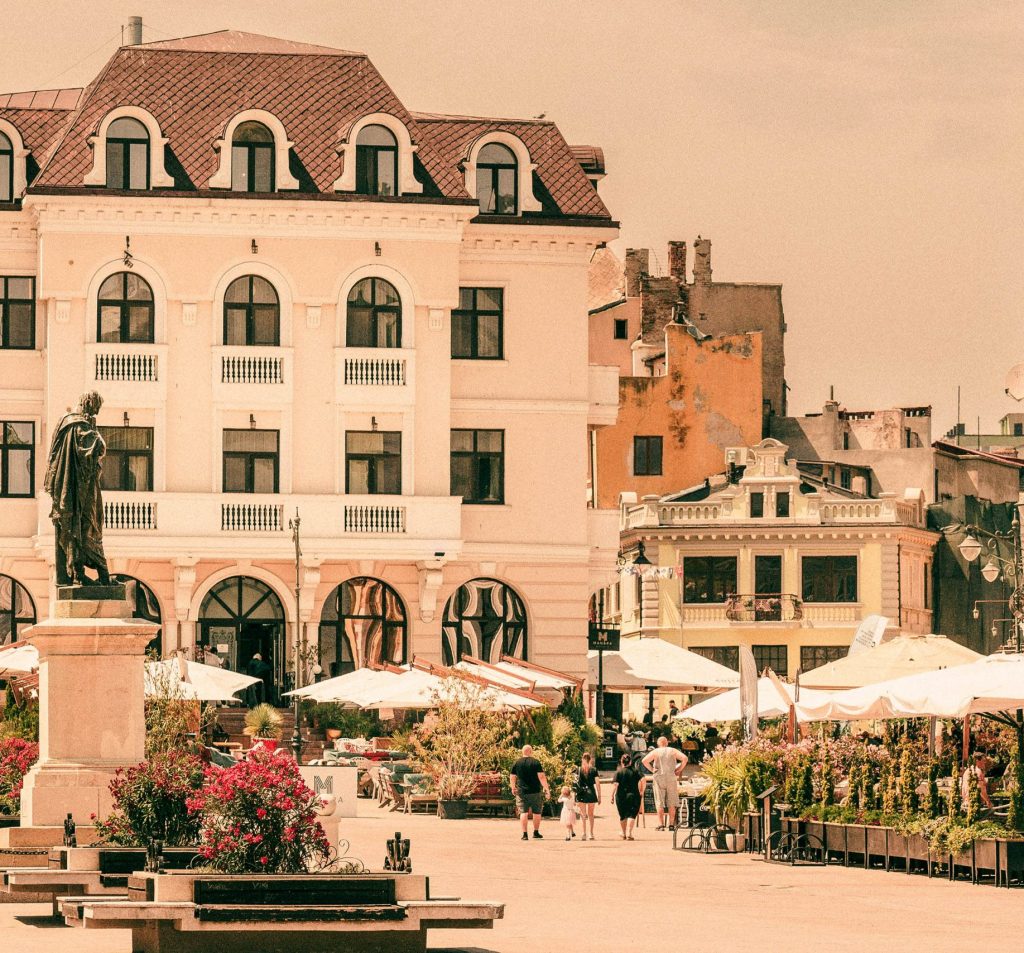
Some noteworthy attractions:
- Constanța Casino – an abandoned art nouveau masterpiece perched on the seafront (a favorite for photographers).
- Old Town & Ovid Square – home to Roman ruins, Ottoman influences, and a relaxed, coastal vibe.
- Mamaia Beach – just north of the city, this is Romania’s most famous beach resort, with long sandy stretches, cafés, beach clubs, and a lively summer atmosphere.
Veliko Tarnovo, Bulgaria
Best for: travelers who want something different from Romania alone, enjoy history-heavy destinations, and don’t mind a longer, guided day trip.
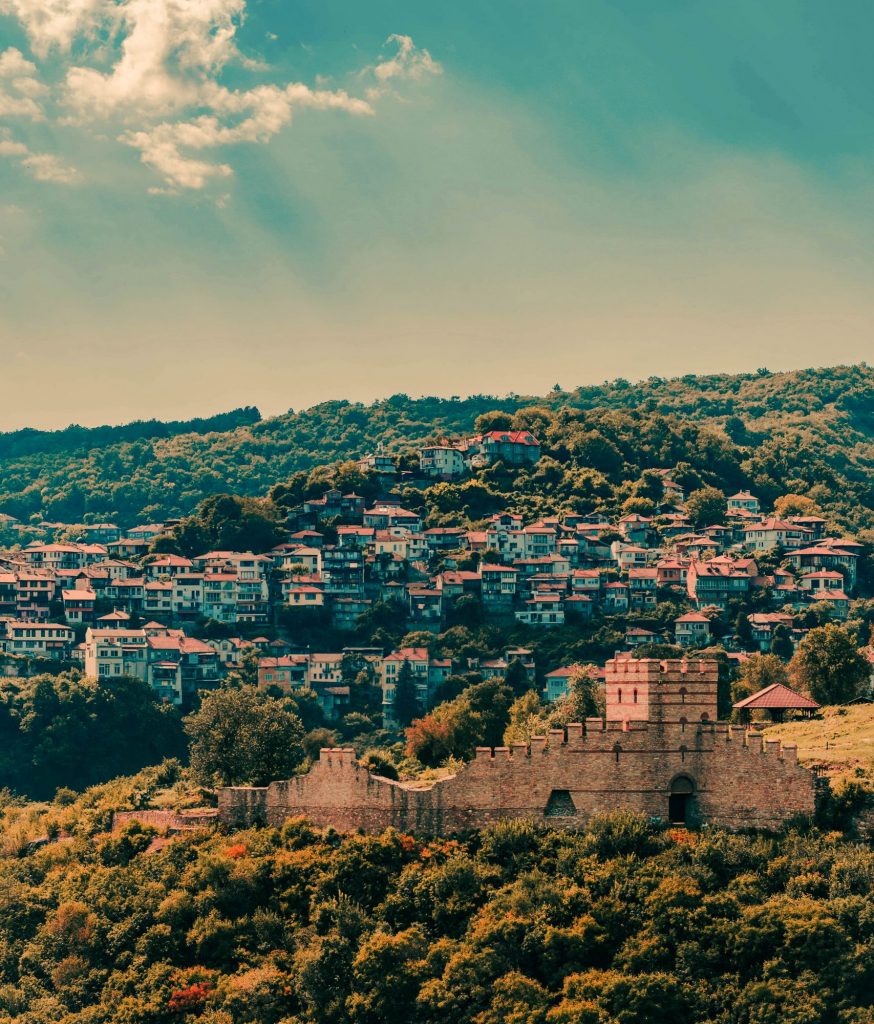
Organized tours from Bucharest offer a full-day trip to Veliko Tarnovo, Bulgaria. Often described as the “spiritual heart of Bulgaria,” Veliko Tarnovo is a small, charming town with mountain views, a lively street market, and a picturesque Old Town.
It’s about 3 hours by car (excluding traffic). There aren’t any direct public transport options, but the guided tours are relatively affordable and comfortable, often with a few bonus stops along the way. Since it’s an international trip, bring your passport, though you likely won’t need it.
In Veliko Tarnovo, here are a few places to explore:
- Old Town – full of charming cobbled streets, artisan shops, and Ottoman-era houses.
- Tsarevets Fortress – an imposing hilltop citadel with sweeping views, reconstructed walls, and a light show at night.
- Samovodska Charshiya – a traditional market street with local crafts and sweets.
Logistics
Entry Requirements

As of January 2025, Romania is part of the Schengen Zone, allowing for passport-free travel for travelers moving within Schengen countries.
EU/EEA citizens are allowed to enter Romania freely for up to three months with a valid passport or national identity card. A stay over three months requires registering with the IGI (General Inspectorate for Immigration) for a registration certificate.
Visa-Exempt Nationalities may currently enter Romania and anywhere within the Schengen Zone without a visa for up to 90 days out of a 180 day period. You”ll need to have a passport valid at least 6 months beyond your intended stay.
Schengen Visa Holders: if you have a multiple-entry Schengen visa that’s still valid and you haven’t used up all entries or exceeded your stay time, you can cross into Romania without applying for a separate Romanian visa. Time spent in Romania still counts toward your total Schengen stay.
Visa-Required Nationalities: typically need to submit an online visa application through the Romanian Ministry of Foreign Affairs portal, then schedule an appointment at a Romanian embassy or consulate. After submitting all required documents (you may also need to attend an interview), the embassy will process the visa request. Processing usually takes 10-15 days, but can take up to 60 in exceptional cases.
Do I need a visa?
You can check the visa requirements for your passport and destination on Passport Index’s Travel Visa Checker.
You can also visit Romania’s Ministry of Foreign Affairs website for the most current information for foreign visitors.
Data/Internet
Internet
Mobile internet coverage is widely available and decently fast, with free Wi-Fi common in cafés and public spaces.
The three main network providers in Romania are Orange, Vodafone, and Telekom. Orange has the best coverage, with Vodafone coming in second, followed by Telekom, the most budget-friendly option.
For up-to-date info on median mobile and broadband internet speeds, check out SpeedTest’s page on Romania.

Phone Plans
There are 4 main carrier options for phone plans in Romania: Orange, Vodafone, Telekom, and Digi. Orange has the best coverage throughout the country, so best for anyone going to more remote areas. Vodafone is also commonly used for its good coverage and competitive pricing. Telekom and Digi have less national reach but offer competitive pricing and may be worth a look if you’re staying in more urban areas that are within the coverage areas.
If you’re looking for a US-based phone plan with international data included, T-Mobile and Verizon offer their “Unlimited Plus” plans, which are roughly the same cost and coverage.
Google-Fi also advertises international data included in their highest plan, but they specify their phone plan is not meant for extended international travel (meaning over 90 days). I had huge issues with their customer support suspending my account while I was still traveling even though I was well within the contract limits. This was only my experience, but it was enough for me to stop recommending it for longer trips.
eSIMs
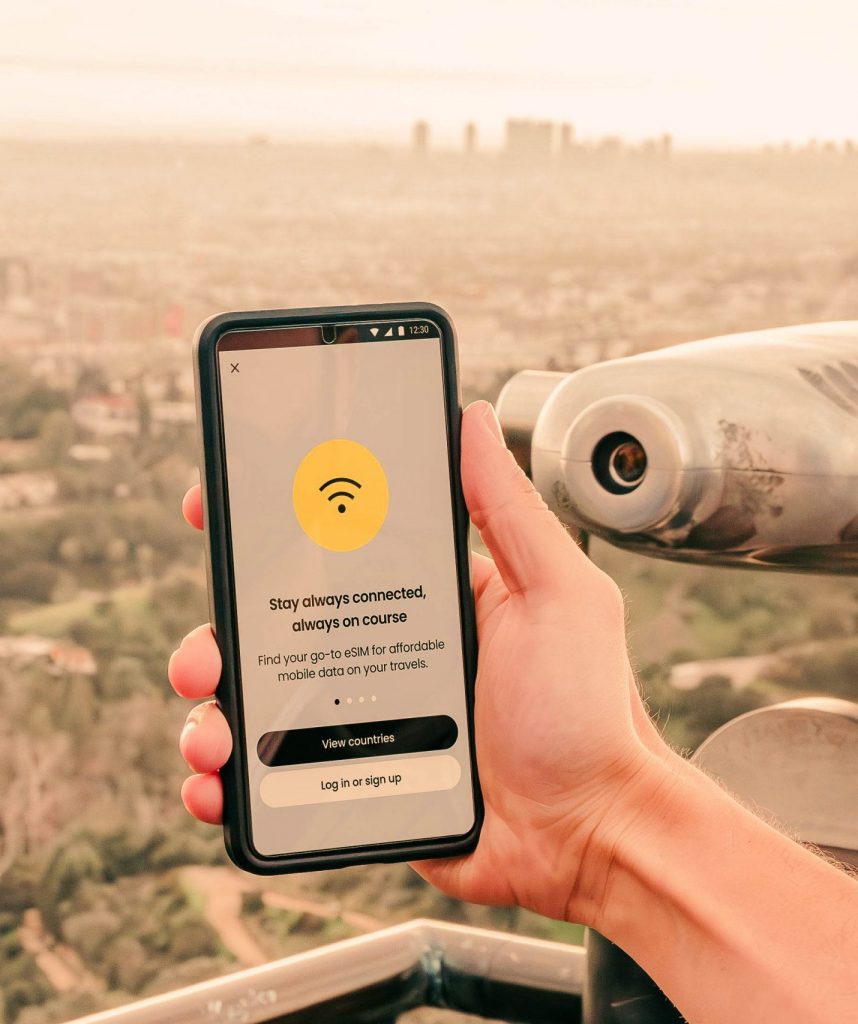
There are plenty of eSIM providers that provide data within Europe or even just Romania. I currently use Orbit eSIM for their affordable global plans.
I’ve also had good experiences using Airalo when I traveled Western Europe long-term: it’s a solid option for long-term use if you don’t need a lot of data (you can get good prices on 3/5/10GB plans for 30-day periods). Just make sure you’re on a reliable network when you activate it or it could fail to activate and cause a host of issues.
Jetpac is another budget option I like to use for short trips: they usually have a promotional deal for 1GB for 1 euro for 3 days.
Electricity
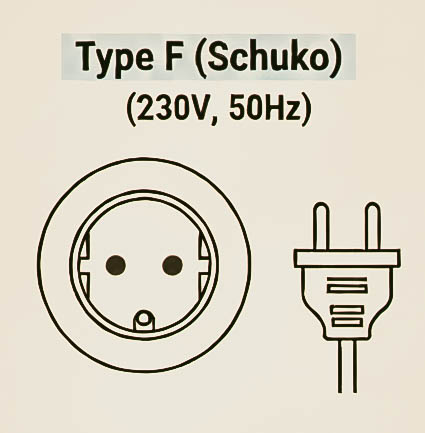
Romania uses Type F outlets, with 230 volts at 50 hertz, which are also compatible with Type-C outlets (“europlugs”) used in most of Europe, and across parts of Africa, South America, and Asia.
You can check the website Power Plugs & Sockets of the World to see if you’ll need a travel adapter or converter depending on where you live.
Currency: lei (RON)
Lei (RON): the primary currency used in Romania
Euros: Romania has not adopted the euro despite being in the EU/Schengen Area. Most of the time when I tried to use euros, it was either an inconvenience or was just outright refused. When they are, the exchange rate is usually unfavorable, so you’re better off using lei if you can.
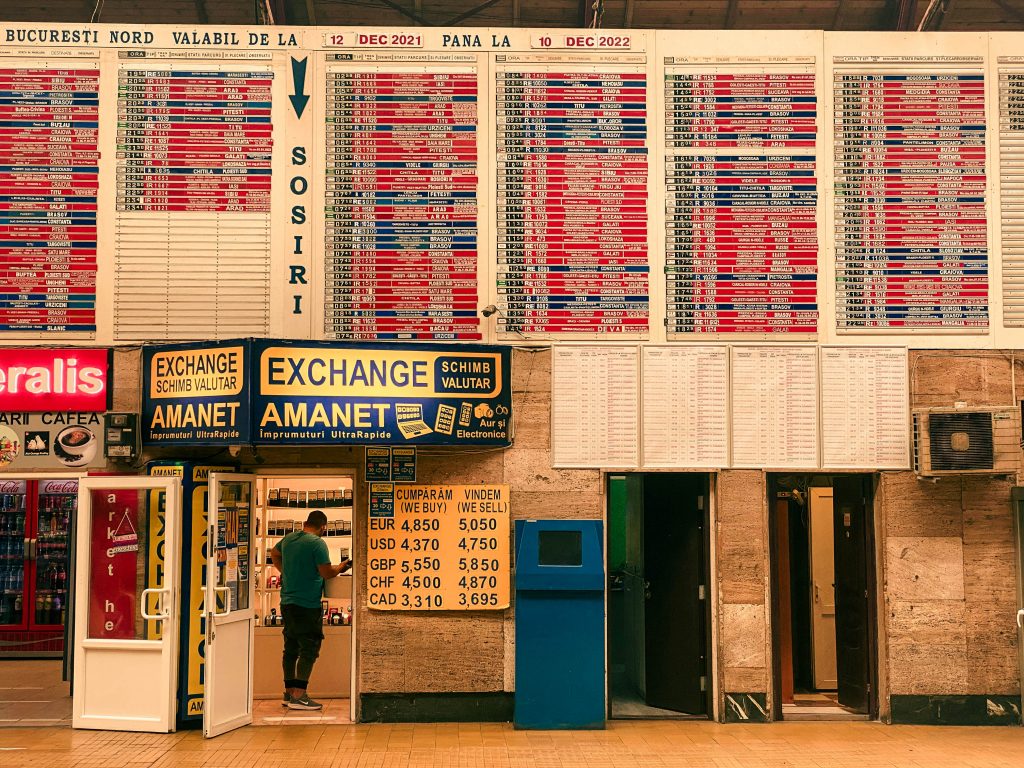
Exchange Rate RON: Sat, 18 Apr.
How To Reach Bucharest
Bucharest city center is relatively easy to get into, whether you’re flying in, coming by train, or arriving on a long-distance bus. Most international travelers will land at Henri Coandă International Airport (OTP), which has straightforward and affordable transport options into the city. Trains and public transit are generally reliable, and ride-share apps are widely used, affordable, and often the simplest option if you’re arriving late or hauling luggage.
From Henri Coandă International Airport (OTP)
Bucharest has two commercial airports, but 85 percent of flights come in through Henri Coandă Airport, also known as OTP. There are four main options to get from OTP into Bucharest’s city center: train, bus, taxi, or ride-share.
By Train
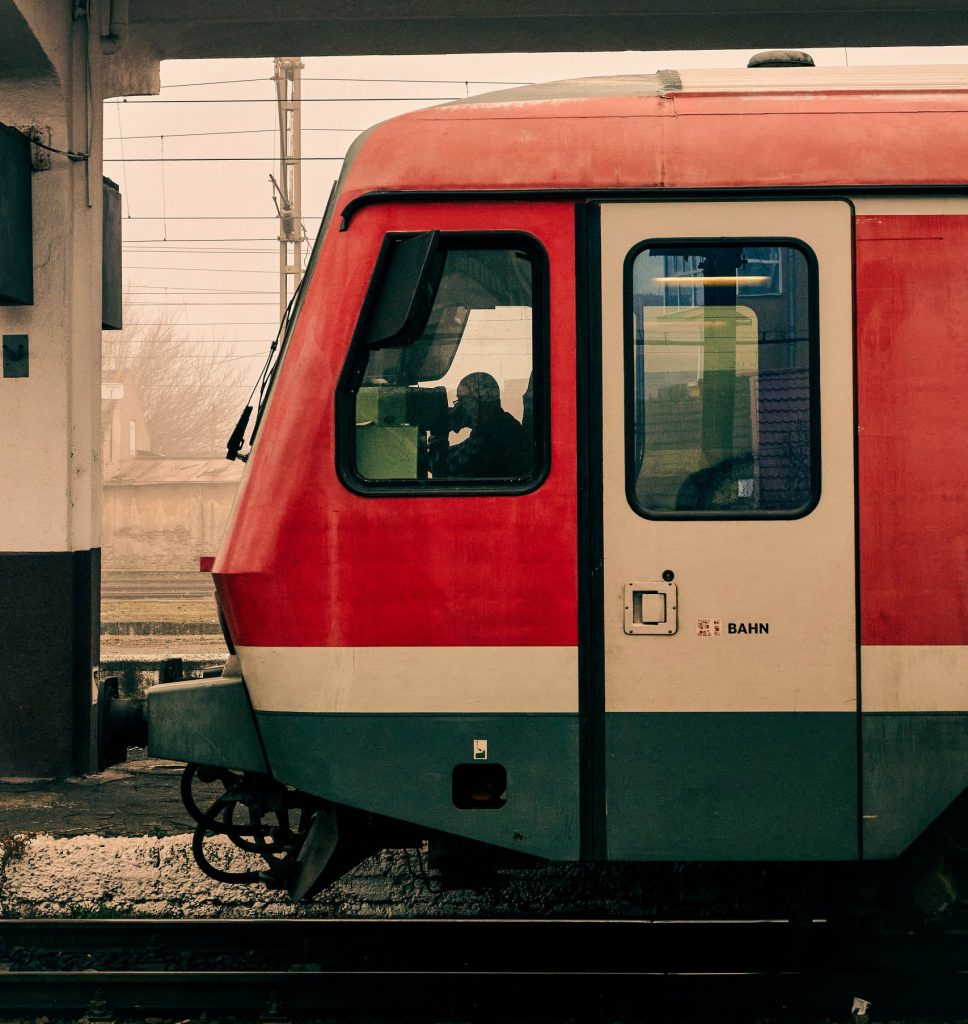
There’s a direct train between OTP and Gara de Nord (the main train station in Bucharest) that runs nonstop every 30-40 minutes and takes about 20-25 minutes. The train station is connected to the airport terminal via a short covered walkway and is clearly signposted.
As of 2025, train tickets are 6 lei for non-reserved seating, 10 lei for reserved seats. There are also first-class seats available at an upcharge. Unless you’re traveling with a large group at peak time or have a ton of bags, you can stick with non-reserved seating.
You can buy your tickets on the CFR app, at a ticket stand in either train station, or on the train (via tap-to-pay).
By Bus
The 100 Express Bus runs nonstop every 15 minutes during the day and every 30 minutes at night. The two pickup spots at OTP are the ground floor in front of Arrivals and the ground floor in front of Departures and connect to various central spots in Bucharest, including Piața Unirii (Union Square), and takes around 40-60 minutes.
Bus tickets are 3 lei per trip. You can pay via tap-to-pay on the ticket machine inside the bus, via the 24pay app, by SMS (text the number 7458 with the text C), or with a metro card, which you can buy at metro station kiosks.
By Taxi
I have been specifically warned against using taxis as a foreigner, but there is an official taxi stand outside the Arrivals terminal on the ground floor, where lines are clearly signposted. Avoid accepting rides from drivers approaching you inside the terminal.
You can also order a taxi from the touchscreen terminals inside the airport before heading to the pickup location. They usually cost around 50-80 RON, and you will likely need to pay in cash (meaning lei —taxi drivers usually won’t accept euros).
By Ride-Share
The two main ride-share options in Romania are Uber and Bolt. I tend to use Bolt because they regularly offer promotions for up to 30% off rides, are generally cheaper than Uber, and I’ve had a great experience with them thus far. Ride prices to and from the airport depend on time/arrival location, and rates can fluctuate greatly during peak hours, but tend to be anywhere from 60-120 RON. (Mine to Sector 1 at 10:30pm on a Saturday was 85 RON, to give a general idea).
Ride-share drivers arrive at the designated ride-share pickup point on the first floor of the parking lot in front of the Arrivals terminal. Just follow the signs towards “ride-share” as you exit the airport.
From Aurel Vlaicu International Airport (BBU)
Generally known as Băneasa Airport or Bucharest City Airport, this small airport services select budget and regional airlines, including WizzAir. Driving from the airport to the city center takes about 13-20 minutes depending on traffic.
By Public Transport
Buses, trams, and trolleys operate from around 4:30am to 11:50pm, with buses/trolleys 131, 335, 148, 112, 301 and tram line 5 making stops at the airport. Additionally, there’s the Express Line 100, which also services OTP. All public transit tickets are 3 lei per trip (except the metro, which is 5 lei). Unfortunately, there aren’t currently any direct metro lines to/from BBU.
By Taxi
There are no authorized taxi touchscreen terminals at BBU like there are at OTP. You can order a private transfer online, but I would recommend just using ride-share or public transport instead.
By Ride-Share
I have not personally used ride-share from BBU, but there is a pickup zone for cars outside the airport entrance.
From Gara de Nord (Main Train Station)
Depending on where in the city you’re going, you can either use public transport or walk. Gara de Nord is relatively central, and has direct connections to the M1 and M4 metro, as well as numerous tram and bus lines. Google Maps has a pretty accurate public transit map and I’ve used it countless times to navigate unfamiliar routes.
But if you’re unsure, I would recommend an Uber or Bolt (not a taxi—they are parked out front of the station, but be wary of scams) to your final destination: they are relatively affordable (about 20-40 lei), especially for short distances within the city.
From Autogara Filaret (Main Bus Station)
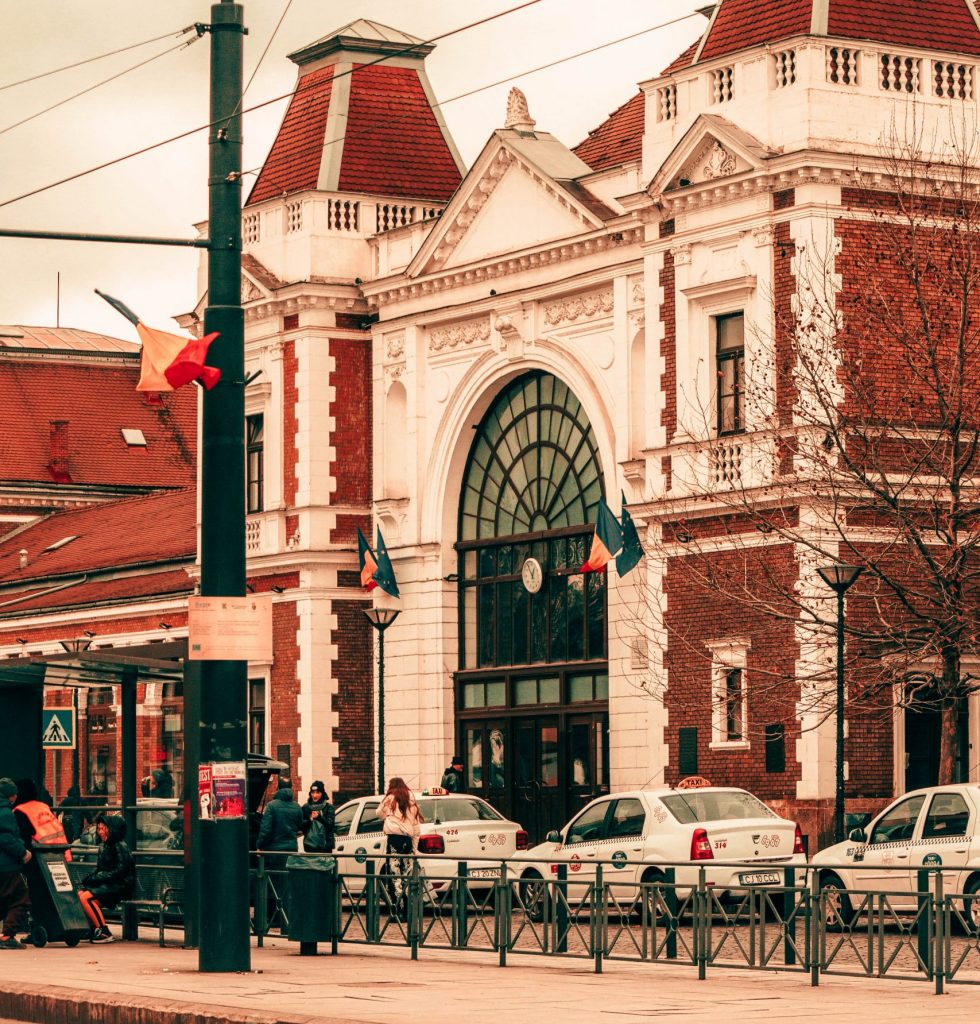
Filaret handles most long-haul and international bus routes in and out of Bucharest. You can take tram line 7 to/from Piața Unirii and transfer (if needed) to your final destination. It’s also a 25 minute walk to Piața Unirii from the bus station, if you’d rather hoof it.
From Autogara Militari
Militari is a smaller, less common station, but you’ll likely end up here if you’re using Flixbus. From here to the city center, you can take the M1 Metro line to central locations like Universitate, Piața Romană, Gara de Nord. There are also multiple bus routes that pass through the station (330, 178, 336, etc.). Again, Maps will be your best friend here to find the best/fastest route at whatever given time.
Accommodation
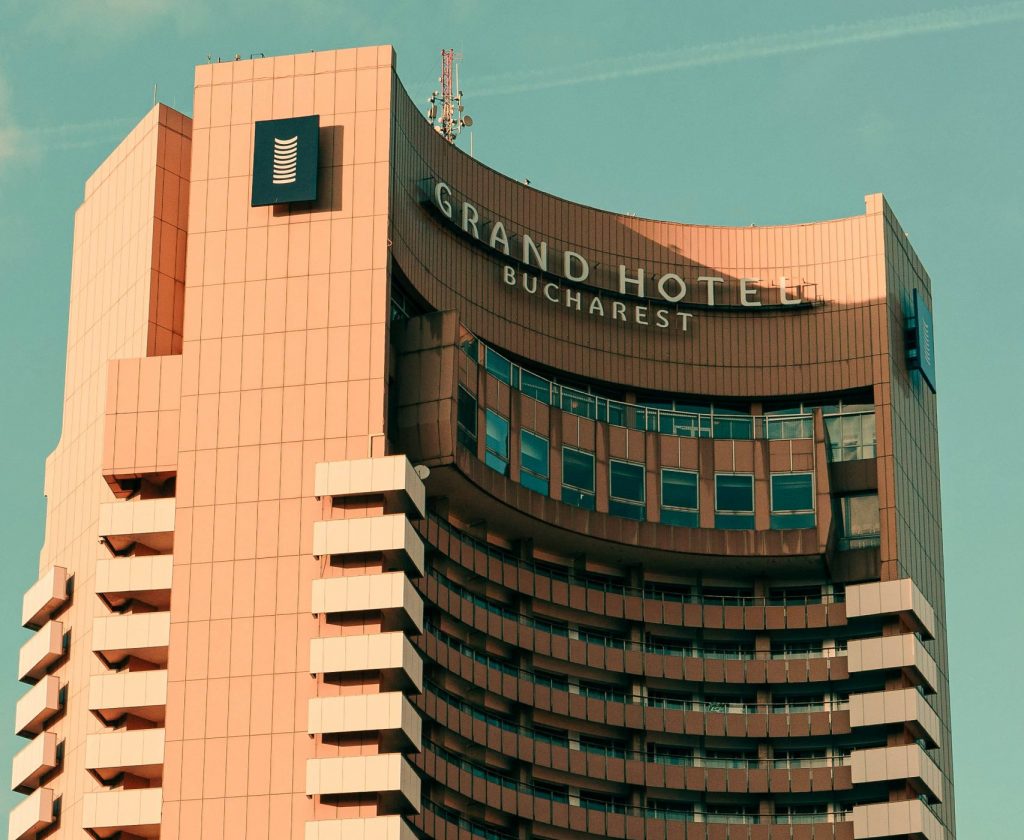
Based on where you want to be in the city—and how you like to travel—Bucharest offers a wide range of accommodation, from social hostels and short-term apartments to high-end hotels. If you’re visiting for the first time or want easy access to museums, cafés, and transit, Sector 1 and Calea Victoriei are a great base. Old Town works best if nightlife is a priority, while areas just outside the center are better suited for longer stays or lighter sleepers.
Prices listed are estimated ranges based on availability at the time of writing.
Hotels
Hotels Near Otopeni Airport:
If you’re flying in late or are just planning a trip to Therme București, and don’t need to be in the city center, staying in Otopeni is far more convenient than commuting into the city center.
Hilton Garden Inn Bucharest Airport
Bulevardul Aeroportului 13, Otopeni
Price: €85–150/night
A reliable airport hotel within walking distance of the terminal. Early breakfast is available for early flights, and there’s a free shuttle to Therme.
RIN Airport Hotel
Calea Bucureștilor 255A, Otopeni
Price: €65–150/night
A more budget-friendly option with solid amenities, including an indoor pool and regular airport and Therme shuttles.
La Livada
Strada Zborului 5, Otopeni
Price: €45/night
A simple, well-reviewed budget hotel listed on Booking.com. It’s about a 20-minute walk from the airport (along a busy road), with taxis easily available nearby.
Hotels In The City Center:
These hotels are well-located for sightseeing and make a solid base whether you’re in Bucharest for a few nights or a few weeks.
Quick picks
- Best luxury stay: InterContinental Athénée Palace
- Best budget: Casa Mendeleev
- Best for nightlife: Vilacrosse Boutique Inn
Luxury
- InterContinental Athénée Palace Bucharest
1–3 Strada Episcopiei, Sector 1
Price: €170–400+/night
One of Bucharest’s most iconic luxury hotels. Some suites are extravagantly priced, but standard rooms can be somewhat more reasonable for the level of comfort and location. - Grand Hotel Bucharest
4 Bulevardul Nicolae Bălcescu, Sector 1
Price: €100–250+/night
A Bucharest landmark overlooking Piața Universității, with panoramic city views and a very central location.
Mid-Range
- Vilacrosse Boutique Inn
Calea Victoriei 16-20
Price: €60–90/night
Located in Old Town along Calea Victoriei, this boutique inn has colorful, eclectic rooms and a great location for exploring. Expect some noise at night. - Hotel Liad City Center
Strada Colței 44
Price: €60–100/night
Just far enough from Old Town to avoid most of the chaos while still being walkable. Well-rated, comfortable rooms, and often better prices through third-party sites.
Budget
- Casa Mendeleev
Str. D. I. Mendeleev N. 17
Price: €45–100/night
Located right off of Calea Victoriei, this 3-star hotel has good reviews, pretty rooms, and a 24-hour reception. It’s a good balance between price point and nice amenities. - Downtown Inn Bucharest
Strada Episcopiei 1–3, Sector 1
Price: €55–75/night
A solid budget hotel with breakfast included. Not right in the center, but close to cafés, restaurants, and Calea Victoriei.
Hostels
Bucharest has a small but solid hostel scene, with options ranging from highly social spaces to quieter, budget-friendly stays. If you’re traveling solo or on a tighter budget, hostels here are affordable, generally well-located, and an easy way to meet other travelers.
T5 Social
1–3 Strada Episcopiei, Sector 1
Price: €20–30/night
The extrovert’s dream hostel, T5 Social is known for nightly events like game nights and open mics. It’s not the most central location, so expect a short walk (at least 15 minutes) or ride into busier areas.
Antique Hostel
Splaiul Independenței 2, București 030167
Price: €12–30/night
Set near the Dâmbovița River and Old Town, with dorms and private rooms, a kitchen, and a terrace. Their website is a bit wonky, though, and Booking.com usually offers the best deals.
SleepInn Hostel
Splaiul Independenței 2, București 030167
Price: €12–14/night (dorms), €40–50/night (private rooms)
A no-frills but well-reviewed hostel a five-minute walk from Old Town, offering mixed dorms and private rooms with en-suite bathrooms, lockers, and kitchen access.
Short-Term Apartment Rentals
For stays longer than a week or two, apartment rentals can offer better value and more space than hotels. While there are local listings and Facebook groups, these tend to be best for 1+ year leases. I generally find Airbnb and Booking.com to be the easiest options for short- to mid-term stays.
I rented my Sector 1 apartment through Airbnb for three months and had a smooth experience, including flexible date changes and responsive support. That said, Airbnb prices can fluctuate a lot by season, and long-term listings aren’t always consistent in quality or legality, so it’s worth reading reviews carefully and confirming utilities, Wi-Fi, and check-in details in advance.
Booking.com also has a lot of good deals on apartment rentals that are well-reviewed and can be as or more affordable as traditional hotels. Black Habit has rooms available on Booking and doubles as a beloved local cafe with good coffee and lovely outdoor seating.
Getting Around Bucharest
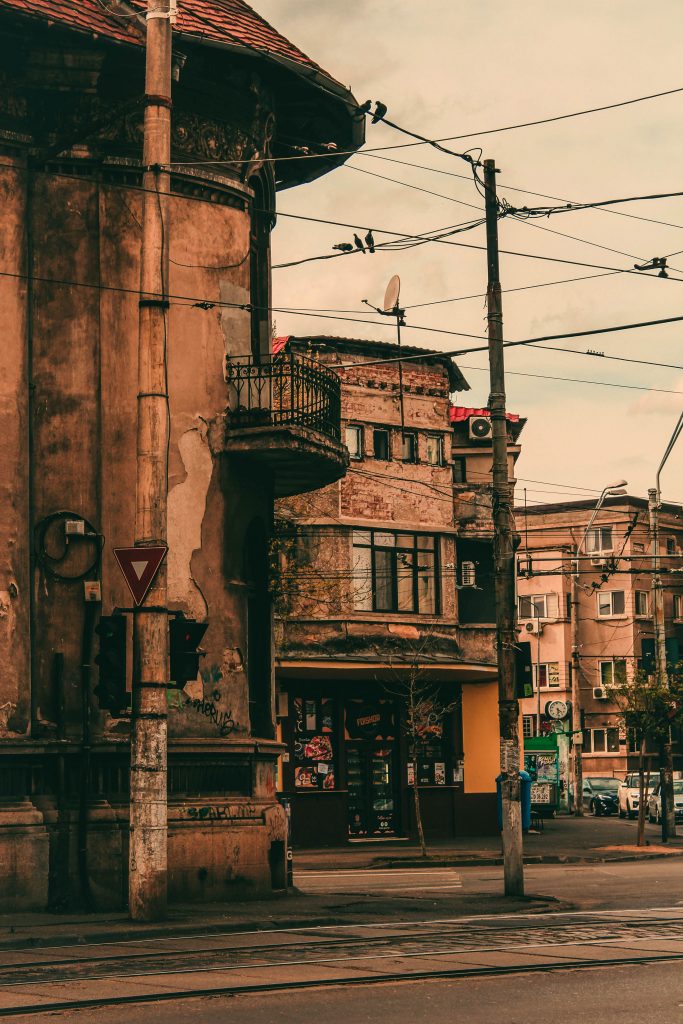
Bucharest has a decent public transportation system, especially if you’re not straying too far from popular destinations like Old Town or University Square. Much of the city center is walkable, and if you can, I highly recommend taking time to explore on foot—Calea Victoriei in particular is great for wandering, cafés, and people-watching.
Public transportation is run by STB, and payments are straightforward: you can use tap-to-pay on board, buy tickets via the 24pay app, by SMS, or at station kiosks (where available). Just make sure you validate your ticket when you enter—spot checks do happen.
Buses/Trams/Trolleys
Daytime service runs between 4:30am and 11:50pm, with a couple of dedicated nighttime lines (Linii de Noapte) operating overnight. Frequency varies depending on the route and time of day, with service more frequent at peak hours.
One trip cost 3 lei, with multi-trip ticket options available. Payment options include tap-to-pay, the 24pay app, SMS, or physical tickets purchased in advance.
Metro
Trains run 5am to 11pm every 5–10 minutes on weekdays, slightly less often on weekends. Tickets are 5 lei per trip and can be purchased through rechargeable cards purchased at the station kiosks or tap-to-pay at the gates.
While the metro network is not extensive, it is clean, reliable, and useful for travel between major areas of the city.
Taxis
Official taxis are yellow and have the price per kilometer printed clearly on the side—generally around 1.99–2.29 lei/km. Anything significantly higher is a red flag. Always make sure the meter is running, and avoid unmarked cars offering rides. Additionally, apps like Star Taxi are commonly recommended for e-hailing licensed taxis.
Ride-Share
Uber and Bolt both work well in Bucharest. Bolt tends to be a bit cheaper, and it’s what I use most often. Bolt also offers a monthly subscription that includes their delivery service. It can be a good value if you’re taking a lot of rides and also ordering food in (pricing varies, so check the current rates).
Living In Bucharest
Compared to other European countries, Bucharest still has a relatively low cost of living, though prices—especially for food and goods—have risen noticeably in recent years. Even so, services remain much cheaper than in much of Europe, with things like one-hour massages or small tattoos costing a fraction of what you’d pay somewhere else.
Grocery Shopping
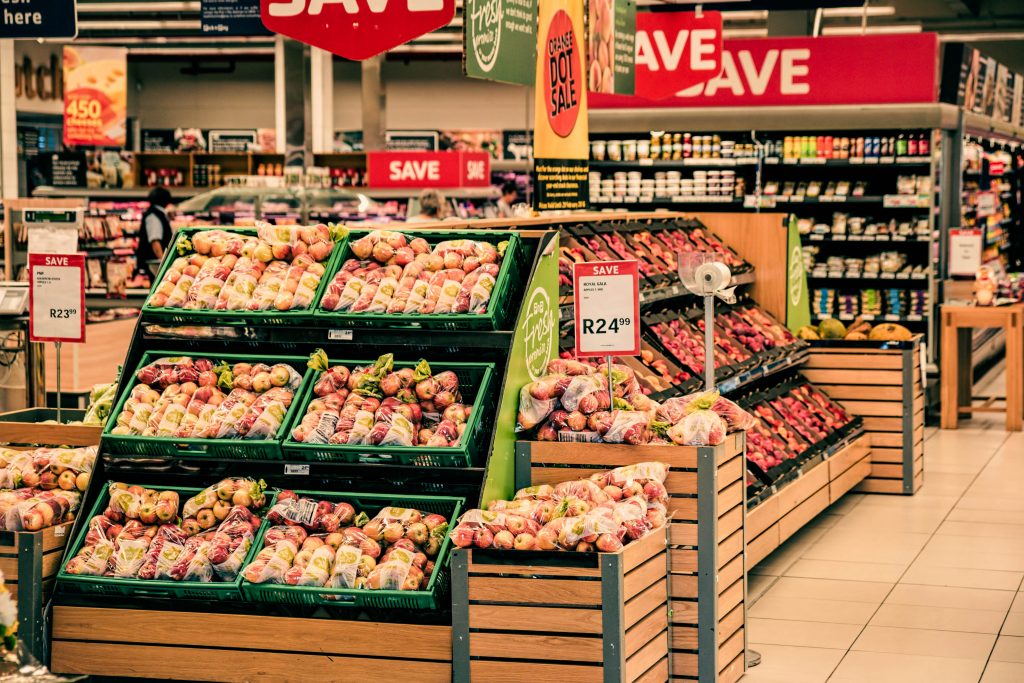
Supermarkets like Carrefour and Mega Image have a larger stock than local markets but tend to be more expensive. The discount store Penny has good prices but a limited inventory. Kaufland and Lidl have better prices than the other supermarkets, but if you are prioritizing affordability, the best options by far are local markets.
For buying local, quality groceries the obvious choice is Obor Market. It’s massive, you can find anything and everything there, and at great prices. I personally love going to Obor and walking away with kilos of food that will last me a week or more that cost me less than 40 RON. It’s deeply satisfying. 10/10 recommend.
Rent
Bucharest rent prices are, overall, still reasonable for a European capital—though they’ve been steadily rising in the past few years. Sector 1 and Sector 2 are the most popular for expats and digital nomads, largely because they’re well-connected, relatively central, and generally feel safe.
I stayed in Sector 1 and loved the balance between central location and residential calm.
For standard, 1+ year leases, expect to pay:
- Studios / 1-bedrooms: €350–600 depending on location, furnishings, and whether you’re in a new building.
- 2-bedroom apartments: €600–900, with modern buildings in the north (e.g. Floreasca, Aviatiei) being at the higher end.
- Shared rooms or apartments: €250–400 for a decent room in a good area.
Most landlords want at least one month’s deposit, and some may ask for two. Airbnb medium-term stays (1–3 months) can actually be competitive, especially if you negotiate a monthly discount. Just be aware that utilities can get pricey in older buildings with less insulation —I had issues with the summer heat and the insane cost of AC to keep my place from becoming a sauna.
I paid about 850 euros/month for my apartment through Airbnb in Sector 1. I chose a pricier option because my apartment had a freestanding bathtub and a whimsical design that I loved, but I easily could have gotten one around 600-700 euros/month including all fees and utilities.
Cost Of Living
Overall, Bucharest is more affordable than most Western European capitals, though costs have risen quickly in recent years. Eating out regularly, going to events, and living in a central neighborhood will bump costs up quickly.
Budget Breakdown (Single Person)
The following budget estimates cost for a single person living alone in a relatively central neighborhood in Bucharest.
| Category | Low (Frugal) | Mid-Range | High (Comfortable) |
|---|---|---|---|
| Rent (1 bed) | €450 | €650 | €850+ |
| Utilities & Internet | €50 | €80 | €120 |
| Groceries | €150 | €250 | €400 |
| Dining & Entertainment | €100 | €200 | €400+ |
| Transport | €20 | €40 | €80 (incl. Uber habit) |
| Miscellaneous | €50 | €100 | €200 |
| Total | €820 | €1,320 | €2,150+ |
Survival Language
In my experience, Bucharest has been pretty easy—if occasionally awkward—to navigate in English. The only time my limited Romanian really became an issue was when people stopped me on the street asking for directions.
That said, learning a few basic phrases goes a long way. It’s polite, appreciated, and genuinely helpful if you’re staying more than a few days. Most of the Romanian I used regularly came up while ordering food or shopping.
Below are the phrases I found myself using most often.
Basic Greetings/Polite Phrases
| English Phrase | Romanian Translation | Pronunciation (approx.) |
|---|---|---|
| Hello / Hi | Bună ziua / Bună | BOO-nah ZEE-wah / BOO-nah |
| Goodbye | La revedere / Pa | Lah reh-veh-DEH-reh / Pah |
| Please | Vă rog / Te rog | Vuh rog / Teh rog |
| Thank you | Mulțumesc / Mersi | Mool-tsoo-MESK / Mehr-SEE |
| You’re welcome | Cu plăcere | Koo pluh-CHEH-reh |
| Excuse me / Sorry | Scuzați-mă / Scuză-mă | Skoo-ZAHTS-muh / Skoo-ZUH-muh |
| Yes / No | Da / Nu | Dah / Noo |
Useful phrases (For Dining And Shopping)
| Can I have…? | Pot să am…? / Aș putea să am…? | Poht suh ahm…? / Ash poo-TEH-ah suh ahm…? |
| I would like… | Aș dori… | Ash doh-REE |
| Where is the [bathroom]? | Unde este [baia]? | OON-deh YES-teh [BAH-yah]? |
| Is there…? | Există…? / Aveți…? | Ex-EES-tuh…? / Ah-VETS…? |
| Is there [ingredient] in this? | Are [ingredient] în asta? / Conține [ingredient]? | AH-reh … oon AH-stah? / Con-CHEE-neh …? |
| Can I take this to go? | Pot să iau asta la pachet? | Poht suh YOW AH-stah lah pah-KET? |
| Can I have the check? | Nota, vă rog. | NOH-tah, vuh rog |
| I want to sit inside / outside | Vreau să stau înăuntru / afară. | Vrow suh stow oo-nuh-OON-troo / ah-FAH-ruh |
| Table for [ ] person/people? | O masă pentru [] persoane? | Oh MAH-suh PEN-troo … per-SWAH-neh? |
| I have a reservation for [ ] people | Am o rezervare pentru [] persoane. | Ahm oh reh-zehr-VAH-reh pen-troo … per-SWAH-neh |
| Can you help me? How do I do that? | Mă puteți ajuta? Cum fac asta? | Muh poo-TETS ah-zhoo-TAH? Koom fahk AH-stah? |
Pronunciation tips for Romanian:
- ă = like the “uh” in sofa
- â / î = unique Romanian sound, similar to a deep “uh” from the throat — don’t stress if you can’t get it perfect, most Romanians understand foreigners.
- ce / ci = “cheh” / “chee” (like “cello”)
- ș = “sh” sound
- ț = “ts” sound (like in “pizza”)
Numbers (Helpful For Markets)
| Number | Romanian | Pronunciation (approx.) |
|---|---|---|
| 0 | zero | ZEH-ro |
| 1 | unu | OO-noo |
| 2 | doi | DOY |
| 3 | trei | TRAY |
| 4 | patru | PAH-troo |
| 5 | cinci | CHINCH |
| 6 | șase | SHAH-seh |
| 7 | șapte | SHAHP-teh |
| 8 | opt | OPT |
| 9 | nouă | NOH-uh |
| 10 | zece | ZEH-cheh |
| 11 | unsprezece | OON-spreh-zeh-cheh |
| 12 | doisprezece | DOY-spreh-zeh-cheh |
| 13–19 | [number]sprezece | e.g. paisprezece = 14 |
| 20 | douăzeci | DOH-oo-zech |
| 30 | treizeci | TRAY-zech |
| 40 | patruzeci | PAH-troo-zech |
| 50 | cincizeci | CHINCH-ee-zech |
| 60 | șaizeci | SHAH-ee-zech |
| 70 | șaptezeci | SHAHP-teh-zech |
| 80 | optzeci | OPT-zech |
| 90 | nouăzeci | NOH-uh-zech |
| 100 | o sută | oh SOO-tah |
| 1,000 | o mie | oh MEE-eh |
Quick Number Notes:
- Lei is the plural of leu: treizeci de lei = 30 lei
- Double-digit numbers follow [tens] și [ones] → patruzeci și nouă = 49
- For prices, you’ll hear things like șapte lei și cincizeci = 7.50 lei
FAQs
Is Bucharest safe for tourists?
Overall, yes. Bucharest feels safer than many large European cities, especially in central neighborhoods. Violent crime is rare, but like anywhere, petty theft can happen in crowded areas or on public transport. The biggest thing to watch out for is taxi scams — stick to ride-share apps or official taxis with meters.
How many days do you need in Bucharest?
For the city itself, 2–3 full days is enough to see the main sights without rushing. If you want to take day trips (like Brașov or Constanța), 4–6 days makes for a much more relaxed experience. Bucharest also works well as a base for longer stays.
Is Bucharest expensive?
No. Compared to Western Europe, Bucharest is still very affordable — especially for food, transport, and services. Accommodation prices vary widely depending on season and location, but you can eat well, get around easily, and enjoy the city without spending much day-to-day.
Do I need cash, or can I use a card everywhere?
Cards are widely accepted in Bucharest, including on public transport and in most restaurants, cafés, and shops. That said, it’s still useful to carry some cash (lei), especially for markets, smaller neighborhood spots, or taxis.
What is the tipping culture in Romania?
In restaurants and cafes,10% is standard for good service, though it’s not mandatory. Many places won’t automatically add a service charge, so tips are usually left in cash or added when paying by card if the terminal allows it.
Occasionally you’ll find tip suggestions—mostly in tourist-heavy places—for 12%, 15% or even 20% of the bill. You’re more than welcome to tip generously for good service, but don’t feel pressured or expected to do so—10% is fine.
For taxis and ride-shares, rounding up or adding a small tip is common but optional. Hotel staff, hairdressers, and service providers generally appreciate small tips as well, especially for good service. Overall, there’s no need to stress: tipping culture here is relaxed, and no one will make you feel awkward if you choose not to.
Do people speak English in Bucharest?
In most tourist-facing places and among younger people, English is commonly spoken. You may run into language barriers with older generations or in more local neighborhoods, but communication is usually manageable with a few basic Romanian phrases and patience.
What’s the best time of year to visit?
Late spring (May–June) and early fall (September–October), when its warm but not overwhelming, with lots of outdoor seating and events. Summers can be very hot, especially in older buildings. Winters are cold and dreary but still manageable if you don’t mind bundling up.
Is Bucharest walkable?
Yes, very much so. Central areas like Old Town, Calea Victoriei, and University Square are easy to explore on foot. For longer distances, public transport and ride-shares are affordable and reliable.
Do you need a car in Bucharest?
No, and in fact I’d advise against one. Traffic is notoriously bad in Bucharest, and public transport options are regularly faster than traveling by car, especially during peak times. Unless you’re planning to go to more remote areas of the country where public transport isn’t available, you absolutely do not need to rent a car while you’re here.
Should I visit Bucharest?
The million dollar question. Bucharest tends to be overlooked in favor of more famous European cities, but it’s especially well-suited to first-time visitors to Eastern Europe, slow travelers, and anyone more interested in everyday culture than ticking off landmarks. It’s affordable, walkable, and full of neighborhoods, cafés, and parks that are worth exploring. If any of that sounds appealing, I’d say Bucharest is well worth your time.
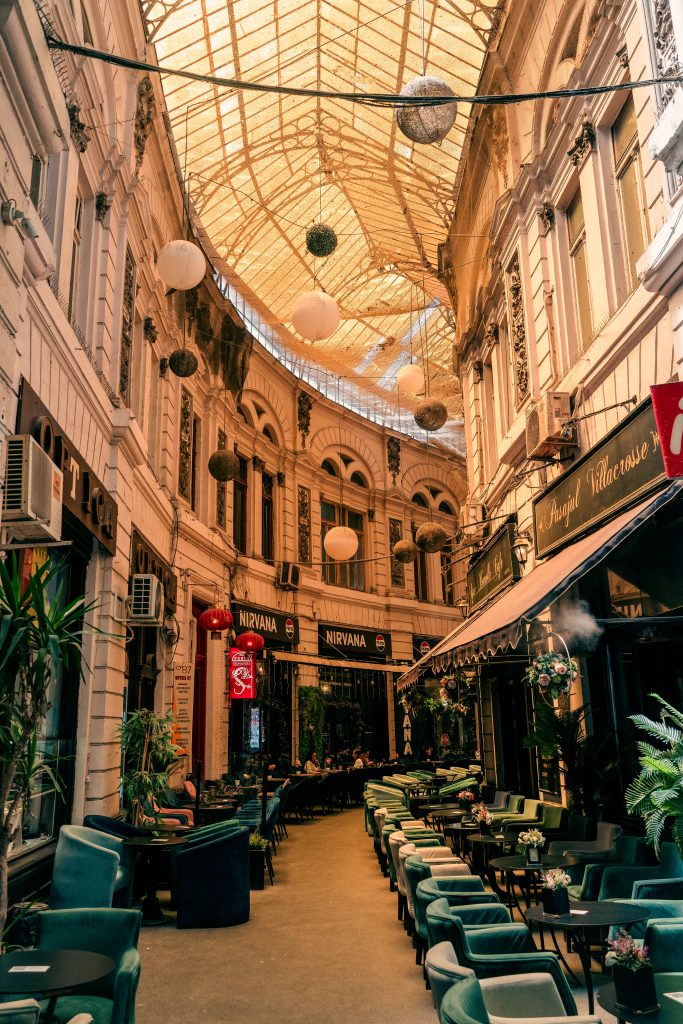
What a well-thought-out, helpful guide. I had never thought of visiting Bucharest before, but it may have to be next on my list. The Vilacrosse Boutique Inn looks so so charming, and the Therme looks super cool despite your lukewarm (ha) review (but I love a swim and a cocktail…)
Thanks for this!
~S
Incredibly informative! Well written and direct, this is a great travel guide! The bolding is incredibly helpful when scanning and all of it was so pleasant to read. I look forward to following your adventures Elle!
Wow! You’ve thought of everything!! I love how it begins with the basics, but as you go on, there is information about things I wouldn’t have even thought about needing to know. Super helpful for planning a trip.