Navigating the Language Barrier Abroad
Storytime

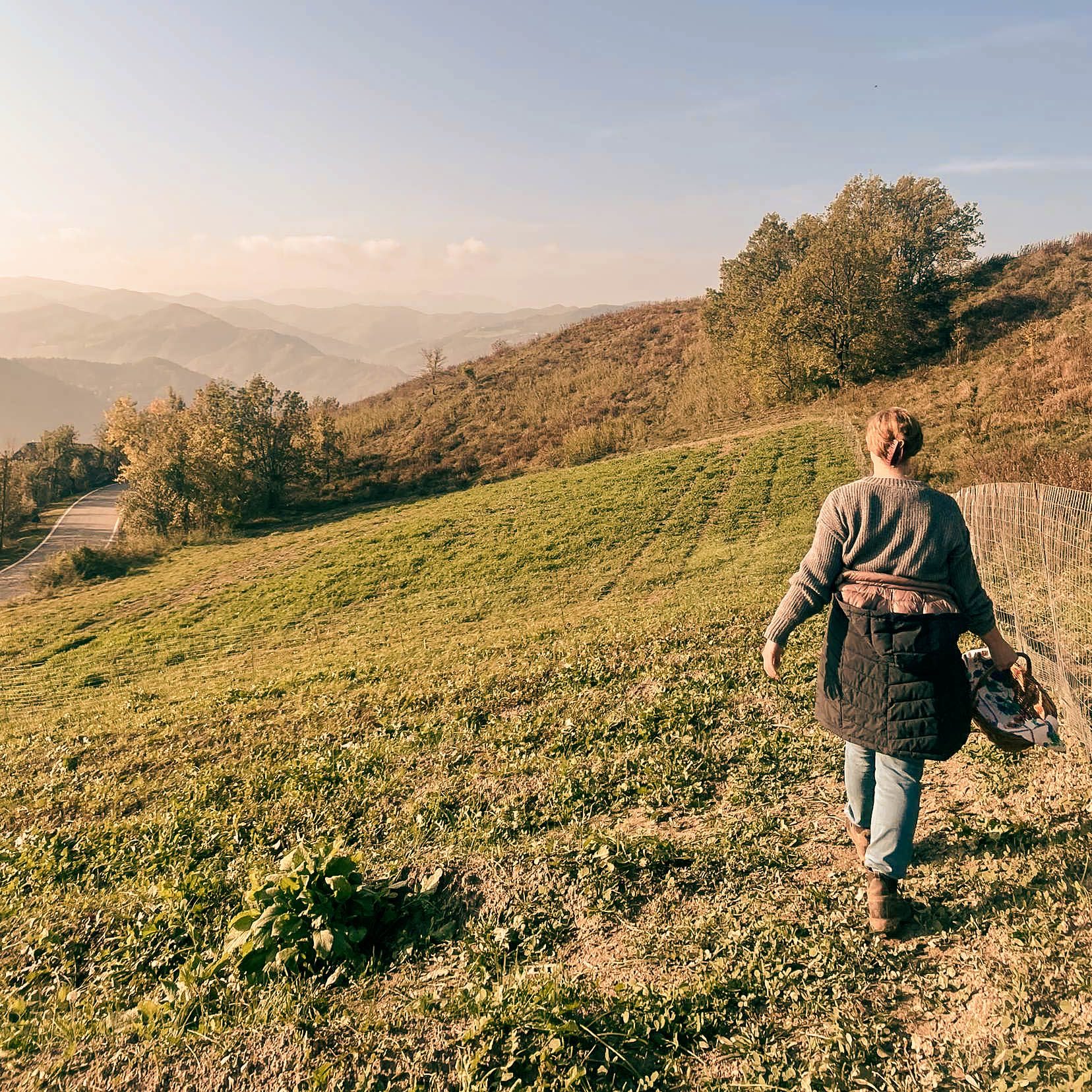
I moved to Morocco in September 2022. For the first three months, I stayed with a host family in a small mountain village called Ouaouizeght while I trained in the local language, Darija (a dialect of Arabic). Before training began, I was told not to study the language on my own for fear of picking up bad habits that would be difficult to unlearn. So on the morning I arrived at my host family’s front doorstep, I didn’t speak a single word of Darija, and they didn’t speak a word of English.
To set the scene: I arrived with four other people — all of us foreigners there to study Darija — in a grand taxi that parked in the middle of a very crowded street. People were milling about and staring as I stumbled out of the car, searching for our instructor, who was meant to deliver us and our suitcases (holding all of our earthly belongings for the next two years) to our host families, whom we only knew from a few slips of paper listing their names and ages.
The taxi driver tried to ask me a question in Arabic, and I stared blankly, shrugging apologetically as I looked around for Salah. He switched to French, and I could hardly bear the shame of my confusion.
Salah, our instructor, arrived shortly after us with our luggage, and as soon as he stepped out of his taxi, our driver started talking in rapid-fire Darija. His wild gestures and angry tone seemed to suggest a problem, but when Salah turned to us, he simply pointed to the group of people hovering on the sidewalk and said, “These are your families.”
He separated us one by one, shepherding each of us to one of the four small clusters and introducing us in Darija. He pointed me toward a demure girl my age and her stern-looking mother, then was pulled into another heated conversation. I approached, gave a small wave, and the girl said, “Nice to meet you,” in English.
A wave of relief washed over me… which was precisely the moment Salah came over and said, “Sorry, you’re actually with this family.” He brought me to another girl my age and her mother — two entirely different people — both of whom immediately started talking loudly to Salah. He turned to me and said, “Alright, have a good night,” leaving me with my luggage and these two women, who took my hands and guided me like a spooked sheep back to their house.
They asked me questions, and I stared at them with a wide, panic-stricken expression that made them laugh. Once inside my home for the next three months, I was seated on a couch and served an incredible array of sweets and mint tea before the room descended into silence. I tried to use Google Translate on my phone, but as it turns out, it doesn’t work well with Moroccan Arabic, and my host mother and sister didn’t read Arabic anyway. Pantomiming became the name of the game. Pointing and nodding were my new best friends.
Lessons Learned
Immersive language learning is a lot like reverting to toddlerhood. You rely on basic words and accompanying gestures to communicate, and everyone struggles to make out your meaning, even when you’re certain you’re conveying your point brilliantly.
I wanted to share the story of my arrival in Ouaouizeght to illustrate my experience with the challenges of a language barrier. The anxiety, the helplessness, the frustration, the confusion — those feelings were so real and powerful as I navigated my first experience living abroad.
Even as I gained confidence, I was still painfully aware of the ways in which I was limited as a non-native, non-fluent speaker. Once-mundane tasks like buying groceries or paying the electric bill became part of a daily struggle that threatened to exhaust me over time. Casual socializing was no longer comfortable or easy, and in many respects it was an isolating, lonely experience.
However, in spite of the challenges — or perhaps because of them — I learned a lot about myself during my time in Morocco. Total immersion is the best and fastest way to learn a new language, but it also requires using it before you’re confident or comfortable, which means messing up a lot.

I had to learn to laugh at myself. As it turns out, it’s far too easy to accidentally swear in a language you don’t know very well. I also learned to celebrate even the smallest of victories. Managing to ask the grocer if he has your particular brand of cheese in stock is a surprising technical challenge and success deserves celebration.
I’ve put together some advice and lessons learned from navigating language barriers throughout my travels. While living in Morocco has been my longest stint abroad (so far), I also learned a lot from my time in other places where the language barrier was a bit less extreme. Hopefully, the story of my time learning Darija in Morocco is entertaining rather than discouraging — though there were challenges, I don’t regret going there for a second.
Tips + Tricks
Tragically, there’s no magic bullet for learning a new language perfectly or communicating flawlessly in a non-native language. I have an incredible amount of admiration and respect for anyone living in a country where their native language isn’t the primary language spoken.
In my experience, the U.S. in particular can be quite unforgiving toward non-native speakers, and after experiencing the stress and mental drain of navigating an unfamiliar language for a couple of years, I can only begin to fathom the strength it takes to do that every single day.
With that said, I’ve put together an overview of some tools I’ve used for communication and self-care that helped me navigate language barriers during my travels. Certain tools worked better in some situations than others, and I’ve tried to give an accurate breakdown of which helped most and when.
For Communication
Translator Apps
When this works best:
- Translation between similar languages (e.g., Romance languages)
- Practicing on your own
- Relaxed settings when people have time to be patient and work slowly to understand each other
When this works least best:
Fast-paced situations (public transport, running errands, etc.)
Languages that use a lot of idioms/flowery language with indirect meanings
Lesser-known languages/dialects
With folks who aren’t tech-savvy
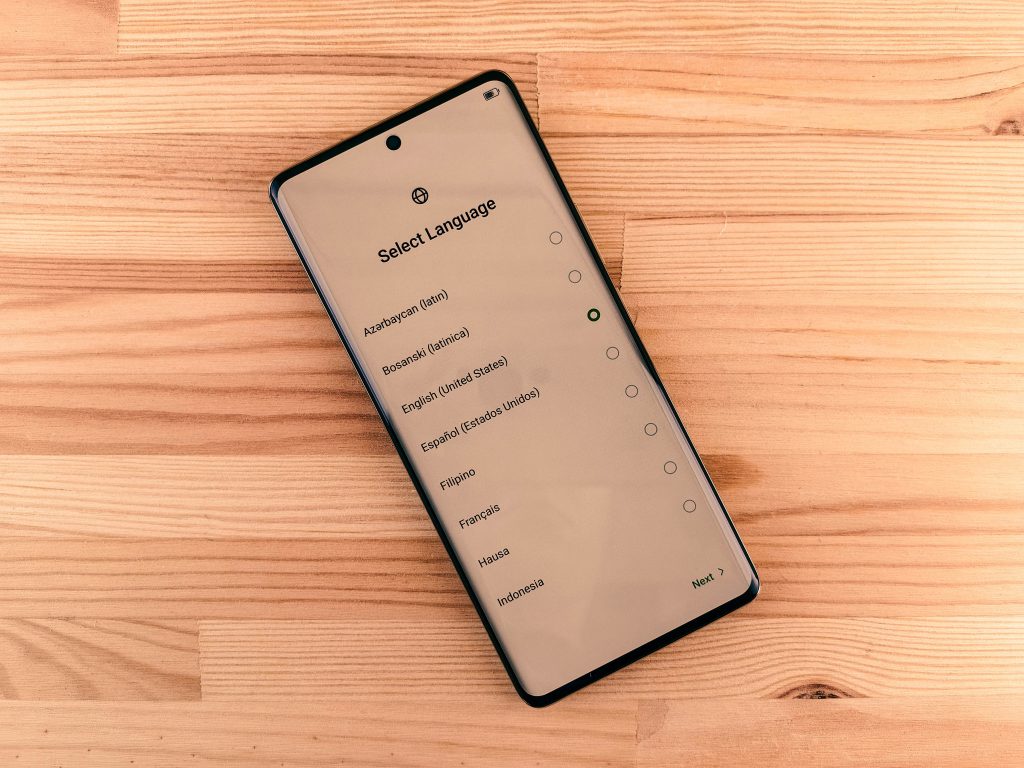
With the ever-present rise of AI, as we charge at full speed toward the singularity, translator apps have gotten exponentially better than when I first used them to cheat on my French homework in high school. When I WWOOFed in Italy, one of the farmers I stayed with had limited English skills, and while we mostly communicated with a patchwork of Italian and English vocabulary, we used Google Translate for more intricate conversations.
It was by no means a perfect solution, but for the most part, my host would speak in Italian while the translator worked in real time; I would read what she said and then respond, either by typing or speaking out loud in English. This tended to be a slow process, but we had time and a mutual desire to understand each other, so it worked well for us.
On the other hand, this required us all to have some familiarity with technology. When an older Italian woman tried to ask me something at a bus stop, I showed her my translator app and asked her to repeat what she’d said in Italian. She was so deeply confused — no matter how much I pantomimed — that she eventually walked away bewildered, her question unanswered.
The other snag with translator apps I’ve noticed is that they work well for some languages (mainly Indo-European) but not for others. In Morocco, even when people switched to Modern Standard Arabic (rather than Darija) to make translation easier, the app would often mistranslate things in almost absurd ways.
Another time I frequently used a translator app was to double-check my own work. For example, if I needed to ask a cashier at a grocery store if they had a certain spice, I would type whatever I wanted to say into the translator app and make sure it fit with what I had come up with on my own.
So while translator apps can be a useful tool, they aren’t very effective in brief interactions when people don’t have the time to patiently understand each other, especially for languages not well supported by mainstream translation tools.

Asking For Help
When this works best:
- If you have a (local) support network
- With patient strangers
- While trusting your instincts
I’ve been fortunate to meet many wonderful people on my travels who are now my friends and whom I’ve relied on for help when I truly needed it (like when I was detained at the Spanish border, for example).
While part of the challenge of moving abroad and traveling frequently has been having a limited local support network, those same circumstances have made me appreciate the kindness of others even more. I’ve had friends go above and beyond for me when I’ve struggled to navigate in a foreign language.
However, I also learned to rely on the kindness of strangers in a way my wary Northeastern U.S. mind initially struggled to accept. But the number of times I’ve had kind older ladies stick up for me at a grand taxi stand when the driver was trying to overcharge me, or a kid who could understand my thick American accent translating for me to his older relatives, has been countless.
Part of preparing for solo traveling involved mentally steeling myself to be able to handle difficult or stressful situations on my own. When I moved to Morocco, even though I was going as part of a group, I was sure I’d be navigating life solo. And while I learned that I was capable of handling a lot more than I ever thought possible, I also realized that maybe I don’t need to white-knuckle my way through life just to prove that I can.
So learning to rely on other people was a skill I had to nurture and build over time (I’ve never been good at trust falls). But tempered with trusting my instincts and intuition, I’ve been lucky enough to experience the true kindness of strangers and people at their best.
For Language Learning
Language-Learning Apps
When this works best:
- Supplementing in-person learning
- Refreshing rusty skills
- Consistent use over time
When this works least best:
- As a standalone learning resource
- Short-term crash courses
- Reaching true conversational proficiency
I’ve used several different online resources for language learning over the years. Duolingo is the most popular app I know, and it offers an extensive library of languages. However, its freemium model has become increasingly infuriating over the years.
Even if you pay for its premium features (like unlimited mistakes), I find it to be a fairly ineffective teaching resource. For most languages, it offers no grammar lessons or contextual information for the vocabulary you’re learning, and it doesn’t encourage you to synthesize your own language (an essential part of truly learning to speak a new one).
I’ve also used smaller apps specific to the languages I was learning. There are a few available for Moroccan Arabic/Darija. They were mostly helpful for learning new vocabulary and were far more limited when it came to understanding grammar, sentence structure, and deeper-level comprehension of the target language.
I purchased a lifetime membership to Babbel, and I now use it for daily language practice. They also offer monthly and annual subscription options, which I used on and off over the years before purchasing lifetime access. I invested in Babbel because unlike Duolingo, Babbel actually offers lessons to suit different language learning needs (there are courses for business language, refresher courses, grammar intensives, and more). I like having in-depth explanations for language mechanics and grammar.
That said, Babbel doesn’t have nearly the same extensive catalog as Duolingo and other learning apps, so if your target language is more niche, it might not be covered. The paywall to access their features is another barrier, though I personally found the investment worth it since I use it so often. The one thing about Babbel, which is true for most language learning apps, is that there’s also limited options for practicing language synthesis. Babbel does have a relatively new AI feature for conversation practice, but it still doesn’t fully replace real-life interaction with another human being.

Tutoring
When this works best:
- Formal lesson plans with certified teachers
- Regularly scheduled sessions
- With native speakers
When this works least best:
- Informal settings
- Inconsistent lesson times
While living in Morocco, following my three months of language training, I hired a tutor for weekly lessons to continue building my skills. Since my tutor lived in the next town over from me, we would alternate between in-person sessions at her house and lessons over the phone.
For the most part, the lessons were fairly informal. Typically, I would bring questions about words or phrases I’d heard throughout the week, we would translate and discuss, and then we would either chat about a specific topic I wanted to try or just have a casual conversation in Darija where I would stop and ask questions when there was something I didn’t know how to say correctly.
In terms of forcing me to practice creating my own sentences and synthesizing language, this method was great. However, the lack of structured, focused lessons limited my progress in gaining new vocabulary and language skills. I became a more confident speaker, but my conversational abilities plateaued at a fairly elementary level. Still, tutoring was definitely helpful for practicing my language skills in a safe environment. I’d recommend making sure your lessons have enough structure to help you get the most out of them.
If in-person tutoring isn’t an option, there are online platforms to connect learners with native-speaking tutors in a variety of languages. Though I haven’t personally used them, I’ve seen good reviews for Preply and Italki. Regular practice and a teaching style that works for you are the key factors here, so whatever platform helps you find that consistency will make your language skills better for it.
Daily Review
When this works best:
- Upkeep for current language skills
- Refreshing rusty skills
When this works least best:
- With limited time or resources
- Inconsistent use
Even five or ten minutes a day can make a noticeable difference in maintaining or building language skills. I used to keep a list of new vocabulary words and quiz myself each day, adding to it periodically and retiring words once they became part of my daily use. However, it worked best as part of a daily routine, and I was able to do it consistently by only setting aside a short amount time to do it, so that it never felt like a burden. The key is consistency rather than volume.
For Self-Care
Taking Breaks
When this works best:
- After particularly draining interactions
- During periods of burnout
- When you feel overwhelmed or discouraged
Taking breaks from language learning — or even from social interaction altogether — can be essential. There were days in Morocco when my brain felt like it had simply shut down. On those days, giving myself permission to rest let me recover so that I was ready to try again with restored energy instead of running on empty.
Count the Small Victories
When this works best:
- Whenever you need it
- Whenever you can
I can’t stress this enough. Being a foreigner in a new country can feel humbling at best and defeating at worst. Celebrating the small wins — understanding a joke, successfully making a phone call, navigating a bureaucratic office without tears — can help bolster your spirits on bad days.
Similarly, allowing yourself grace on the days where the small wins aren’t enough is equally important.

Final Thoughts
In my experience, a language barrier can feel overwhelming and limiting, especially over a long period of time. When I lived in Morocco and my language learning plateaued, I felt frustrated and discouraged more often than I expected. There were moments when I wondered if I would ever feel fully competent or comfortable, and even more when I was certain I wouldn’t.
But language learning and navigating cultural differences was never a straight line. It was messy and deeply humbling. At the same time, it built empathy in a way few other experiences could. Struggling to communicate gave me a deeper respect for and appreciation of what so many people experience daily when living outside their native language.
That said, the most important lesson I learned is that while a language barrier can be awkward or challenging, you don’t need to speak the same language to connect with people. Being willing to put in the extra effort and patience to communicate and understand someone across a language barrier can be incredibly powerful. It always meant the world to me when I was living abroad, and I hope to carry that lesson and spirit with me for the rest of my life.